Neutral Atoms
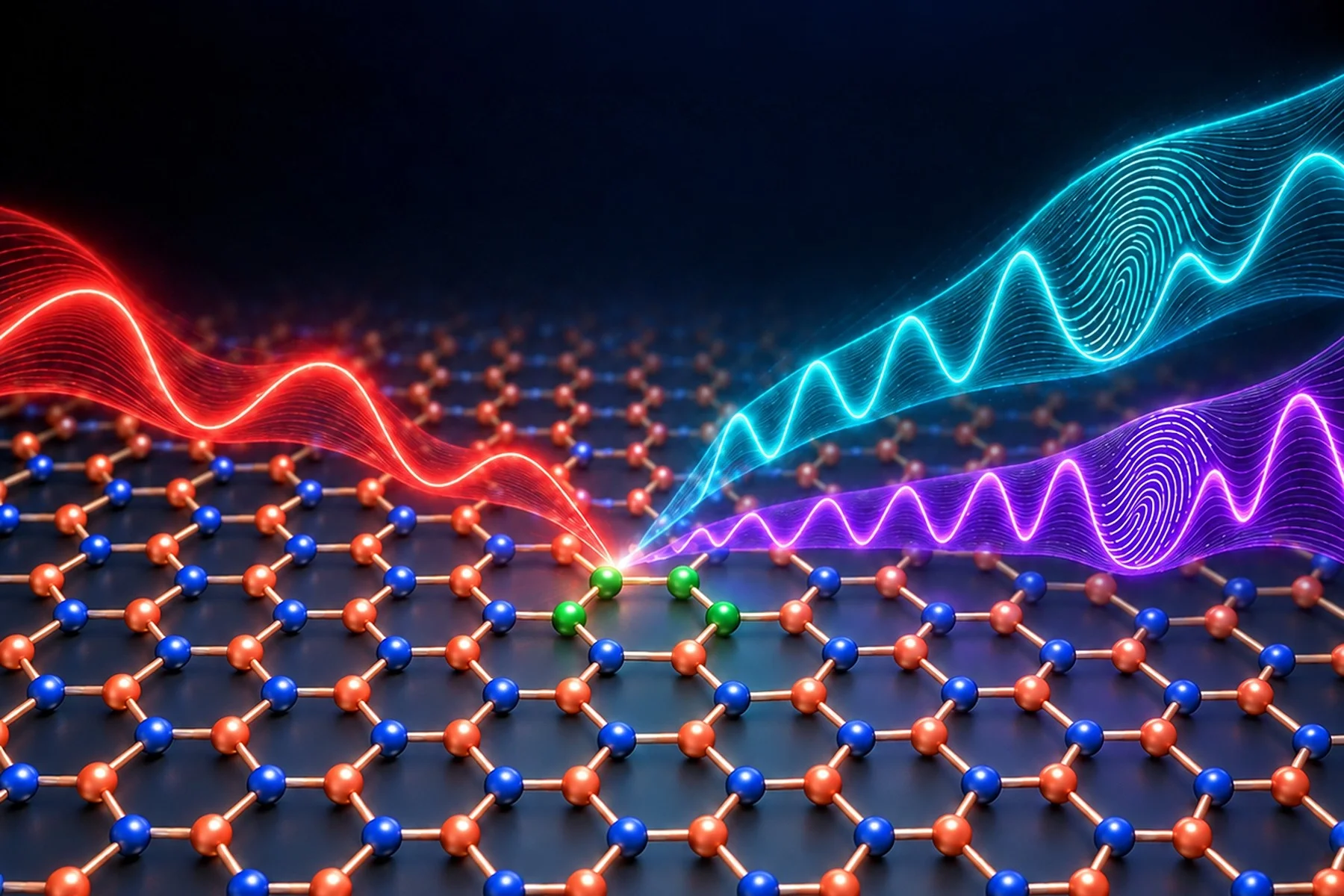
The Harvard-MIT Center for Ultracold Atoms successfully demonstrated the coherent, continuous operation of an array of over 3,000 neutral-atom qubits in experiments. By rapidly replenishing lost atoms while preserving stored quantum information, the team achieved an initialization and replenishment flux exceeding 30,000 qubits per second and extended the coherent operating time of the >3,000-atom array to over 2 hours[31]. In terms of hardware advancement, this achievement elevates the scale of neutral-atom physical qubits from the previous commercial baseline of 1,180 qubits set by Atom Computing to a dynamic equilibrium of over 3,000 qubits, experimentally validating continuous, non-destructive reloading of large-scale atoms for the first time. However, on the path toward practical fault tolerance, the system still lacks system-level integration of high-fidelity mid-circuit measurement (measuring a subset of qubits during computation), and the error-correction cycle repetition rate of the atomic array still exhibits a significant timescale gap compared to microsecond-scale superconducting architectures. This technique clears the central physical bottleneck for neutral-atom platforms moving toward hour-scale fault-tolerant computation, establishing foundational feasibility for neutral-atom-focused companies such as QuEra and Pasqal to develop continuous error-correction hardware prototypes over the next 1 to 2 years.
French neutral-atom hardware company Pasqal and the French National Centre for Scientific Research (CNRS) formally established the joint AtomIQ laboratory, focusing on extending atomic coherence lifetimes and tackling the physical engineering limits of next-generation neutral-atom quantum processing units[21]. The joint entity aims to overcome fundamental physical constraints on coherence times caused by excited-state interactions in neutral atoms through optical tweezer array physics and ultra-high-vacuum material improvements. This move further consolidates Europe's academic-industrial intellectual property barrier in the cold-atom domain, supporting Pasqal in engineering iterations of fully fault-tolerant systems to rival North American competitors between 2026 and 2028.
Superconducting Quantum
Researchers successfully measured the intrinsic frequency noise of superconducting qubits by precisely probing the weak dissipation induced by photon loss inside a high-quality-factor superconducting cavity (microwave photon superconducting resonator). Under a cavity-qubit detuning of 508 MHz, they established for the first time a rigorous upper bound on the intrinsic frequency noise power spectral density of 0.70×10³ rad²/s[26]. In terms of progress, this approach enhances noise detection sensitivity by nearly an order of magnitude compared to conventional Ramsey decoherence inversion. However, this measurement has only been validated in an offline single-cavity single-qubit system and has yet to overcome the severe 2- to 3-fold temporal fluctuations of two-level systems (microscopic material defect loss channels) prevalent in multi-qubit mass-production chips. This tool provides a high-sensitivity, non-destructive diagnostic standard for superconducting R&D institutions refining Josephson junction interface passivation processes, and is expected to be integrated into superconducting wafer foundry testing lines within 2 years.
AMD and quantum control company Qblox jointly introduced a new high-speed, low-latency interface that adds only 0.5 microseconds of latency to the state feedback loop between classical control systems and qubits[25], enabling faster and more flexible feedback and allowing classical feedforward operations to keep pace with the microsecond-scale decoherence decay rate of superconducting qubits for the first time. However, the architecture's signal crosstalk suppression capabilities under high-density coaxial cabling exceeding thousands of qubits and cryogenic co-packaging still face long-term validation. This directly benefits fast-gate architectures such as superconducting and spin quantum dots, accelerating the widespread adoption of sub-microsecond active error-correction feedback standards at the control hardware layer before 2027.
Photonic Quantum
A research team successfully constructed a multiplexed photon detection system capable of quantitatively identifying and counting discrete photons with single-photon resolution from 0 to over 9,000 photons[4]. In terms of metrics, this system extends the dynamic range of existing photon-number-resolving detectors by more than two orders of magnitude from dozens of photons, crossing the metrological threshold for the precise characterization of ultra-large-scale photonic quantum states. However, the system still requires cryogenic heterogeneous integration validation to close the loop with the ≥95% detection efficiency of superconducting nanowire single-photon detectors (SNSPDs, highly sensitive superconducting photodetectors) relied upon by PsiQuantum's Omega architecture and stringent end-to-end insertion loss budgets. This development has profound implications for photonic quantum computing companies such as Xanadu and PsiQuantum, poised to reshape standards for continuous-variable optical field diagnostics and large-scale entanglement source calibration over the next 3 years.
Researchers developed a novel on-chip optical waveguide structure based on topological protection mechanisms, reducing the wavelength fluctuations of single photons emitted by quantum light sources in integrated photonic circuits to one-tenth of previous levels[22]. Utilizing topological band edge states, the structure suppresses coherent scattering caused by fabrication tolerances, driving on-chip photon indistinguishability closer to the public state-of-the-art (SOTA) baseline of 99.50% two-photon Hong-Ou-Mandel (HOM) interference (experiments measuring two-photon indistinguishability) fidelity. However, the waveguide has yet to achieve monolithic on-chip integration with high-speed electro-optic modulators. It will assist silicon photonic quantum chip manufacturers in reducing error-correction overhead caused by photon wavelength jitter, with adoption into mainstream photonic integrated circuit foundry process design kits anticipated within 2 years.
Experimentalists successfully implemented a fully programmable integrated photonic quantum processor on a four-dimensional scalable architecture, physically realizing the dynamic configuration and execution of arbitrary high-dimensional quantum measurement bases[27]. This scheme overcomes the hardware limitation of conventional integrated optical circuits restricted to fixed orthogonal projections, realizing the universal mapping of arbitrary positive operator-valued measures (POVMs, the mathematical formulation of generalized quantum measurements) on a multimode programmable platform for the first time. Nevertheless, cumulative optical losses across multi-stage cascaded directional couplers continue to scale exponentially with dimensionality, necessitating further detailed full-link loss budgeting. It provides a universal physical foundation for measurement-based quantum computing and high-dimensional single-photon precision metrology, and is expected to become a core functional module in modular photonic quantum coprocessors within the next 2 years.
Quantum Sensing
A research team from the Faculty of Physics and the Centre of New Technologies at the University of Warsaw developed an ultra-sensitive microwave sensing device utilizing strong Rydberg-Rydberg interactions between cold Rydberg atoms (atoms in highly excited states with large orbital radii), successfully tripling the effective information captured per unit time compared to conventional sensors[3]. By leveraging controlled many-body interactions among atoms, this achievement surpasses the standard quantum limit of non-interacting atomic systems, directly translating many-body entanglement effects into a 3x gain in information flux in microwave detection for the first time. It provides a significant boost for anti-stealth detection of weak radar signals and cryogenic microwave readout bus monitoring in superconducting quantum computers, and is expected to drive the upgrade of high-precision microwave metrology and testing instruments within 3 to 5 years.