Nov 12, 2026 – Nov 13 · Daily Brief

Conquering 10,000-Atom Drug Simulation Accelerates Clinical Targeted Drug R&D

47 items · 12 sourcesPDFThis issue's roundup is free
02Hardware

Hardware Frontiers

Neutral Atoms

The Harvard-MIT Center for Ultracold Atoms successfully demonstrated the coherent, continuous operation of an array of over 3,000 neutral-atom qubits in experiments. By rapidly replenishing lost atoms while preserving stored quantum information, the team achieved an initialization and replenishment flux exceeding 30,000 qubits per second and extended the coherent operating time of the >3,000-atom array to over 2 hours[31]. In terms of hardware advancement, this achievement elevates the scale of neutral-atom physical qubits from the previous commercial baseline of 1,180 qubits set by Atom Computing to a dynamic equilibrium of over 3,000 qubits, experimentally validating continuous, non-destructive reloading of large-scale atoms for the first time. However, on the path toward practical fault tolerance, the system still lacks system-level integration of high-fidelity mid-circuit measurement (measuring a subset of qubits during computation), and the error-correction cycle repetition rate of the atomic array still exhibits a significant timescale gap compared to microsecond-scale superconducting architectures. This technique clears the central physical bottleneck for neutral-atom platforms moving toward hour-scale fault-tolerant computation, establishing foundational feasibility for neutral-atom-focused companies such as QuEra and Pasqal to develop continuous error-correction hardware prototypes over the next 1 to 2 years.

French neutral-atom hardware company Pasqal and the French National Centre for Scientific Research (CNRS) formally established the joint AtomIQ laboratory, focusing on extending atomic coherence lifetimes and tackling the physical engineering limits of next-generation neutral-atom quantum processing units[21]. The joint entity aims to overcome fundamental physical constraints on coherence times caused by excited-state interactions in neutral atoms through optical tweezer array physics and ultra-high-vacuum material improvements. This move further consolidates Europe's academic-industrial intellectual property barrier in the cold-atom domain, supporting Pasqal in engineering iterations of fully fault-tolerant systems to rival North American competitors between 2026 and 2028.

Superconducting Quantum

Researchers successfully measured the intrinsic frequency noise of superconducting qubits by precisely probing the weak dissipation induced by photon loss inside a high-quality-factor superconducting cavity (microwave photon superconducting resonator). Under a cavity-qubit detuning of 508 MHz, they established for the first time a rigorous upper bound on the intrinsic frequency noise power spectral density of 0.70×10³ rad²/s[26]. In terms of progress, this approach enhances noise detection sensitivity by nearly an order of magnitude compared to conventional Ramsey decoherence inversion. However, this measurement has only been validated in an offline single-cavity single-qubit system and has yet to overcome the severe 2- to 3-fold temporal fluctuations of two-level systems (microscopic material defect loss channels) prevalent in multi-qubit mass-production chips. This tool provides a high-sensitivity, non-destructive diagnostic standard for superconducting R&D institutions refining Josephson junction interface passivation processes, and is expected to be integrated into superconducting wafer foundry testing lines within 2 years.

AMD and quantum control company Qblox jointly introduced a new high-speed, low-latency interface that adds only 0.5 microseconds of latency to the state feedback loop between classical control systems and qubits[25], enabling faster and more flexible feedback and allowing classical feedforward operations to keep pace with the microsecond-scale decoherence decay rate of superconducting qubits for the first time. However, the architecture's signal crosstalk suppression capabilities under high-density coaxial cabling exceeding thousands of qubits and cryogenic co-packaging still face long-term validation. This directly benefits fast-gate architectures such as superconducting and spin quantum dots, accelerating the widespread adoption of sub-microsecond active error-correction feedback standards at the control hardware layer before 2027.

Photonic Quantum

A research team successfully constructed a multiplexed photon detection system capable of quantitatively identifying and counting discrete photons with single-photon resolution from 0 to over 9,000 photons[4]. In terms of metrics, this system extends the dynamic range of existing photon-number-resolving detectors by more than two orders of magnitude from dozens of photons, crossing the metrological threshold for the precise characterization of ultra-large-scale photonic quantum states. However, the system still requires cryogenic heterogeneous integration validation to close the loop with the ≥95% detection efficiency of superconducting nanowire single-photon detectors (SNSPDs, highly sensitive superconducting photodetectors) relied upon by PsiQuantum's Omega architecture and stringent end-to-end insertion loss budgets. This development has profound implications for photonic quantum computing companies such as Xanadu and PsiQuantum, poised to reshape standards for continuous-variable optical field diagnostics and large-scale entanglement source calibration over the next 3 years.

Researchers developed a novel on-chip optical waveguide structure based on topological protection mechanisms, reducing the wavelength fluctuations of single photons emitted by quantum light sources in integrated photonic circuits to one-tenth of previous levels[22]. Utilizing topological band edge states, the structure suppresses coherent scattering caused by fabrication tolerances, driving on-chip photon indistinguishability closer to the public state-of-the-art (SOTA) baseline of 99.50% two-photon Hong-Ou-Mandel (HOM) interference (experiments measuring two-photon indistinguishability) fidelity. However, the waveguide has yet to achieve monolithic on-chip integration with high-speed electro-optic modulators. It will assist silicon photonic quantum chip manufacturers in reducing error-correction overhead caused by photon wavelength jitter, with adoption into mainstream photonic integrated circuit foundry process design kits anticipated within 2 years.

Experimentalists successfully implemented a fully programmable integrated photonic quantum processor on a four-dimensional scalable architecture, physically realizing the dynamic configuration and execution of arbitrary high-dimensional quantum measurement bases[27]. This scheme overcomes the hardware limitation of conventional integrated optical circuits restricted to fixed orthogonal projections, realizing the universal mapping of arbitrary positive operator-valued measures (POVMs, the mathematical formulation of generalized quantum measurements) on a multimode programmable platform for the first time. Nevertheless, cumulative optical losses across multi-stage cascaded directional couplers continue to scale exponentially with dimensionality, necessitating further detailed full-link loss budgeting. It provides a universal physical foundation for measurement-based quantum computing and high-dimensional single-photon precision metrology, and is expected to become a core functional module in modular photonic quantum coprocessors within the next 2 years.

Quantum Sensing

A research team from the Faculty of Physics and the Centre of New Technologies at the University of Warsaw developed an ultra-sensitive microwave sensing device utilizing strong Rydberg-Rydberg interactions between cold Rydberg atoms (atoms in highly excited states with large orbital radii), successfully tripling the effective information captured per unit time compared to conventional sensors[3]. By leveraging controlled many-body interactions among atoms, this achievement surpasses the standard quantum limit of non-interacting atomic systems, directly translating many-body entanglement effects into a 3x gain in information flux in microwave detection for the first time. It provides a significant boost for anti-stealth detection of weak radar signals and cryogenic microwave readout bus monitoring in superconducting quantum computers, and is expected to drive the upgrade of high-precision microwave metrology and testing instruments within 3 to 5 years.

03Algorithms

Algorithms & Software

Quantum Error Correction and Microarchitecture

Theoretical physicists rigorously analyzed the failure mechanism of quantum low-density parity-check (QLDPC) codes (error-correcting codes with sparse parity-check matrices) under repeated check measurements, proving for the first time that the hidden error weight lower bound causing catastrophic failure in classical belief-propagation decoders is merely the node degree plus 2 (as low as 4 in specific graph topologies), and constructed a spatiotemporal anisotropic min-sum decoder (a low-overhead check decoding algorithm) that effectively bypasses this breakdown point[30]. This overturns the widespread theoretical assumption in error correction that decoding failures are constrained solely by the minimum code distance, establishing for the first time the rigid constraint of topological degree on decoding thresholds in measurement noise environments while providing a noise-resilient decoding algorithm. It reshapes decoder architectural designs for hardware vendors advancing high-rate error-correcting codes such as QuEra, driving related teams to fully upgrade real-time field-programmable gate array (FPGA, high-speed programmable hardware chips) decoding firmware within 1 to 2 years.

Computer architects designed a three-tier quantum memory hierarchy named "Trident," which drastically reduces the verification latency required to retrieve and load qubits from quantum memory media from the original 178 clock cycles, achieving a full-system computational speedup of 2.8x to 4x[20]. This tackles the long-standing memory wall bottleneck in fault-tolerant microarchitectures where read-and-verify overhead vastly exceeds gate execution time, establishing a hardware-level instruction-stream verification pipeline for the first time. It will directly guide microarchitectural design specifications for future fault-tolerant quantum processors, prompting full-stack compiler and control software developers to re-architect memory access scheduling logic within 2 years.

Noise Mitigation and Engineering Simulation

A research team at the German Aerospace Center (DLR) proposed a Zero-Noise Extrapolation (ZNE, mathematical extrapolation to eliminate systematic errors) algorithm based on benchmark noise and completed cross-platform benchmarking on 100-physical-qubit chips from both IBM and Finland's IQM, converging observable expectation values to noiseless theoretical baselines without increasing measurement sampling overhead[12]. Integrating Pauli twirling (randomized gates to eliminate coherent errors), dynamical decoupling (pulse sequences suppressing decoherence), and randomized readout error mitigation, the algorithm breaks the resource bottleneck where traditional error mitigation quadratically scales quantum sampling resources at the 100-qubit scale for the first time. It provides a zero-additional-hardware-overhead, high-precision solution path for noisy intermediate-scale quantum hardware, and is expected to be integrated as a default compilation and execution option across mainstream superconducting cloud platforms within 6 to 12 months.

QodeX Quantum, in collaboration with researchers from NVIDIA, RTX BBN, and the U.S. Navy, deployed 52 physical qubits on the IBM Heron r3 superconducting processor to successfully solve nonlinear partial differential equations (PDEs, equations describing physical field dynamics) on unstructured complex engineering meshes via gradient-free predictive methods; according to a non-peer-reviewed arXiv preprint, their hybrid quantum reservoir network (training-free dynamic feature mapping) achieved significant error reductions compared to classical baselines[13]. This marks the first experimental demonstration on >50-qubit superconducting physical hardware of a gradient-free backpropagation paradigm for solving nonlinear dynamic PDEs, bypassing the barren plateau mathematical pitfall that plagues traditional variational quantum algorithms. It offers profound insights for defense and heavy industry sectors such as complex aerospace aerodynamic analysis and naval vessel hydrodynamic simulation, and is expected to drive the integration of quantum reservoir coprocessor capabilities into industrial-grade computer-aided engineering software within 2 to 3 years.

Following its previously announced error-correction simulation roadmap, Rigetti Computing disclosed concrete engineering increments in this report, officially integrating its end-to-end error correction pipeline into Quantum Elements' Constellation simulation platform and achieving full-system digital twin modeling—including spatiotemporal drift in single- and two-qubit gate fidelities—on 36-qubit and 108-qubit Cepheus physical architectures[14]. The key increment lies in translating abstract error-correction theoretical models directly down to chip physical-layer topology and electromagnetic crosstalk characteristics, enabling accurate pre-tapeout chip-level prediction for fault-tolerant circuit design. This significantly compresses the trial-and-error cycle for Rigetti's modular multi-chip tiling architecture, and is projected to reduce error-correction tapeout iteration costs for its next-generation 1,000-qubit-scale superconducting chips by one-third.

Secure Outsourcing and Verifiable Computation

Researchers at NTT (Nippon Telegraph and Telephone) established a new cryptographic outsourcing protocol allowing classical client devices to instantiate a "virtual quantum computer" by invoking untrusted or even malicious remote quantum servers, not only executing complex computational tasks but also rigorously verifying persistent quantum memory states[28]. This provides the first mathematical proof that blind quantum computation (privacy-preserving outsourced computing protocols) can maintain computational verifiability under the assumption of malicious cheating hardware nodes, breaking the strict prior assumption that physical servers must follow honest verification protocols. It establishes a foundation of trust for defense, military, and multinational financial institutions hosting confidential workloads on third-party public quantum clouds, and is expected to become an industry compliance standard for secure quantum cloud computing over the next 5 years.

04Industry

Industry & Ecosystem

Industry Investment and Policy Guidance

Atom Computing and the U.S. Department of Commerce officially reached and finalized an R&D agreement totaling $100 million, with the capital to be fully injected into its Boulder, Colorado engineering and manufacturing facility to accelerate the manufacturing scale-up of fault-tolerant-grade neutral-atom quantum hardware[11]. This represents the largest official grant under the CHIPS and Science Act framework awarded to date to an individual hardware enterprise in the neutral-atom space, signaling the transition of cold-atom architectures from intermediate-scale scientific instrument validation to industrial standardized assembly line mass manufacturing. It accelerates the clustering of the U.S. neutral-atom industrial supply chain along the Rocky Mountain corridor, providing ample capital leverage for the company to deliver commercial logical qubit systems ahead of schedule in 2026–2027.

The U.S. Quantum Primacy Commission officially released its preliminary report on November 10, 2026, outlining four strategic pillars to translate scientific research leadership into deployable systems and industrial capacity[46]; concurrently, policy experts at the Foundation for American Innovation published warnings highlighting severe domestic component supply chain and manufacturing capacity gap bottlenecks currently facing the quantum industry[43]. The policy analysis notes that U.S. federal public funding faces international competitive pressure in aggregate scale, with the focus of government capital support shifting significantly from upstream basic science funding to downstream pilot-scale expansion and industrial manufacturing equipment subsidies. This is expected to accelerate additional targeted supply-chain security appropriations by the U.S. Congress prior to the release of the final report in spring 2027, driving domestic order volume for upstream equipment suppliers of dilution refrigerators, ultra-narrow linewidth lasers, and cryogenic microwave cables.

Computing Synergy and Commercial Adoption

Following their earlier technical collaboration, photonic quantum computing company PsiQuantum officially secured a direct strategic equity investment from AMD; the two parties announced the deep integration of AMD GPUs, CPUs, and system software with silicon photonic quantum chips to co-design the underlying classical computing architecture supporting utility-scale fault-tolerant systems[19]. The key increment lies in the transition from pure peripheral chip procurement to a capital-bound hardware-software co-design initiative, establishing the massive real-time classical computing foundation required for error correction in million-physical-qubit photonic quantum architectures. This directly challenges NVIDIA's early monopoly in the quantum-classical heterogeneous computing ecosystem, driving early convergence between silicon photonics fault-tolerant hardware and mainstream semiconductor compute giants on system-in-package and supercomputing cluster interfaces.

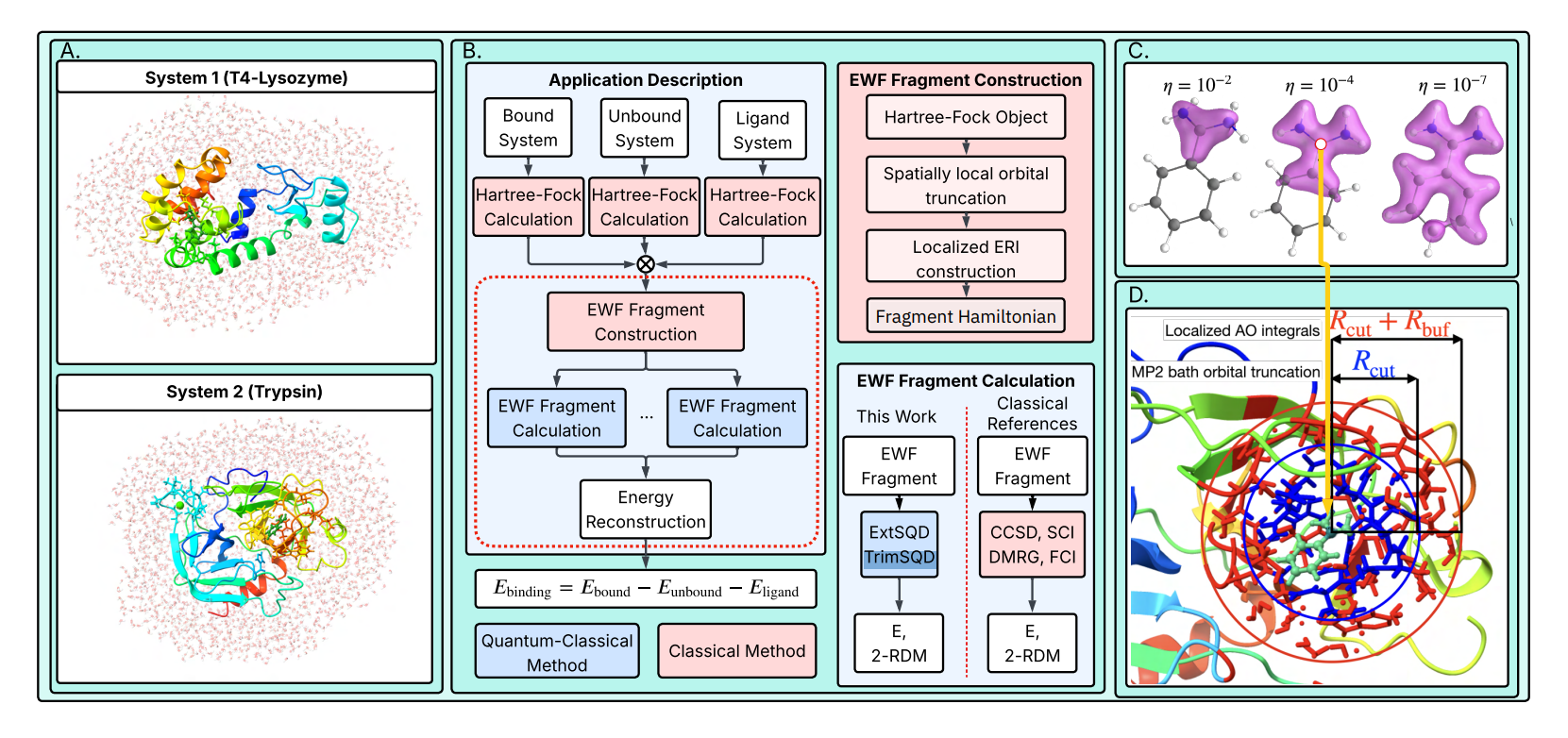
In collaboration with RIKEN and IBM, the Cleveland Clinic leveraged a 156-qubit IBM Heron r2 processor alongside classical supercomputers to complete heterogeneous electronic structure simulations of protein-ligand complexes exceeding 12,000 atoms, achieving pharmaceutical chemistry standards in fragment energy accuracy[16]. This sets a new record for molecular atom count in real-world medicinal chemistry simulations using heterogeneous quantum-classical systems, confirming that current intermediate-scale hardware coupled with classical supercomputers can already tackle complex binding sites in genuine drug targets. It provides global biopharmaceutical enterprises with the first commercially credible 10,000-atom benchmark case for procuring quantum cloud computing, expected to spur multinational pharmaceutical firms to expand dedicated virtual screening quantum budgets within 1 year.

Quantum software company Kipu Quantum officially launched the Rimay quantum feature extraction module in the IBM Quantum Functions catalog. Serving as a preprocessing feature engineering layer for classical statistical analysis, the algorithm demonstrated improved model recall and area under the curve (a metric evaluating binary classification performance) in credit risk default classification tests at financial institutions[18]. This pioneers an asset-light commercialization model where quantum algorithms are embedded as standard API plug-ins within mainstream public cloud marketplaces with revenue-sharing based on invocation volume. It significantly lowers the technical barrier for traditional institutions such as consumer finance firms and commercial banks to utilize quantum compute, and is expected to drive more specialized algorithm startups toward a microservice subscription ecosystem within six months.

German trapped-ion hardware startup QUDORA secured funding from the German Federal Ministry of Research, Technology and Space to officially launch the three-year QUANDA project, deeply integrating trapped-ion systems into high-performance computing clusters to tackle real-world anomaly pattern recognition in electrical power grid operations[33]. This establishes a public-private commercialization demonstration of trapped-ion computing vertically embedded in critical utility infrastructure operations. It prompts European energy giants to proactively deploy quantum monitoring for disturbance-resilient power grids, charting an applied technical pathway for quantum computing to empower industrial decarbonization and energy security.

Quantum cybersecurity company Quantum Cyber disclosed $1 million in commercial revenue in its first fiscal year for its autonomous defense security system, alongside an $8 million financing round funded personally by the company's CEO[32]. At a stage when the industry is broadly characterized by net-loss R&D expenditure, this validates the commercial viability of post-quantum network defense products in the enterprise security market via pure commercial sales contracts. It establishes a clear early-stage revenue valuation benchmark for seed- and Series-A-stage quantum information security software startups.

05Other

Academic Frontiers

Quantum Communication & Networks

A polarization-entangled-photon-based quantum key distribution (a physically unhackable communication technology) backbone network connecting four cities was successfully deployed in western Slovakia, achieving a real-time key generation rate of 13.5 bps over 109 km of commercial telecom fiber without any trusted relay nodes, and distributing secure keys at 4.3 bps under 32.1 dB of channel attenuation[23]. This completely eliminates physical trusted relay stations across a multi-city real-world telecom fiber network for the first time, physically eradicating side-channel risks associated with physical compromise of relay facilities and demonstrating the engineering feasibility of pure entanglement distribution protocols over high-attenuation channels. It establishes a new trust-free relay physical network paradigm for European quantum communication infrastructure and cross-border high-security financial settlement networks, and is expected to drive the evolution of intercity secure communication standards over the next 3 to 5 years.

A Spanish research team completed an 18.9 km field trial of quantum key distribution within the dense, high-noise urban underground fiber conduit network of Barcelona[24]. The trial validated the stable key generation capability of a single-photon dynamic drift tracking and compensation algorithm under real-world metropolitan conditions characterized by strong environmental mechanical vibrations and day-night temperature-induced polarization drift. It provides a direct engineering reference for connecting major smart cities and government confidential data nodes along the Mediterranean coast to quantum-encrypted transmission.

Multinational telecommunications network giant Lumen Technologies announced dedicated research funding to The Ohio State University to explore upgrading and utilizing its vast existing nationwide commercial long-haul fiber network to support future quantum network interconnection and transmission[29]. The project aims to benchmark the physical compatibility limits of legacy commercial fiber in carrying fragile quantum entangled photons under low-dispersion and multiplexed conditions. It signals a shift by traditional Tier-1 telecom operators from passive observation to substantive capital deployment, accelerating the modernization of long-haul optical communication infrastructure into hybrid quantum-classical networks.

Quantum Materials and States of Matter

A physics team at National Taiwan University published a paper in Nature Communications reporting the first experimental observation of transverse electron orbital angular momentum accumulation driven directly by thermal currents, providing definitive proof of the orbital Nernst effect (a temperature-gradient-driven angular momentum flow phenomenon) in solids[5]. Surpassing the limitation of the spin Nernst effect, which can only manipulate electron spin degrees of freedom, the work proves for the first time that applying a thermal gradient alone—without electric or external magnetic fields—can induce large-amplitude orbital angular momentum flows in non-magnetic materials. This opens a new microscopic condensed matter physics pathway for designing next-generation ultra-low-power spin-orbit torque topological storage media and quantum thermoelectric conversion chips.

A multinational research team from the University of Tokyo and Northwestern University utilized photochemical methods to construct long-lived polarized radical pairs within the porous nanochannels of metal-organic frameworks (porous crystalline micro-nanomaterials), achieving high-density, directionally polarized alignment of unpaired electron spins[6]. Overcoming the engineering bottleneck where radical spin states in conventional porous substrates readily undergo spin relaxation and thermal collision quenching, the team locked spin-coherent states onto highly ordered microporous pore walls for the first time. This introduces a novel material platform for microscopic in situ quantum chemical sensing and ultra-sensitive spin resonance probes, expected to play a key role in the in situ elucidation of nanocatalytic reaction mechanisms.

Researchers at the University at Buffalo, State University of New York, successfully deciphered the optical fingerprints of microscopic atomic-scale defects in quantum materials, establishing an accurate decoding mapping between local defect micro-geometries and specific photonic response patterns[44]. This enhances the accuracy of non-destructive optical identification of single-point defects in low-dimensional materials to single-atom resolution, resolving a long-standing measurement bottleneck where overlapping microscopic defect signals could not be quantitatively analyzed. It empowers industrial-grade precision screening of diamond and 2D semiconductor quantum solid-state devices, providing a rapid optical quality inspection method for high-yield solid-state quantum processing chip wafer fabrication.

Researchers discovered a novel method for ultra-fast room-temperature identification of microscopic color center defects in diamond, successfully identifying a suite of new microscopic quantum functional building blocks characterized by long coherence times[36]. This reduces the optical scanning time required to identify high-quality nitrogen-vacancy centers (luminescent defects in diamond lattices) across diamond wafers, achieving high-throughput characterization of room-temperature quantum building blocks. It paves the way for material sorting in the industrial mass production of portable quantum magnetometers and room-temperature quantum biological microscopy probes that operate at ambient conditions without cryogenic refrigeration.

06Impact

Today's Impact

  1. Drug Discovery & Life Sciences: The 10,000-Atom Barrier Falls

Affected Parties: Computational biochemistry departments at multinational pharmaceutical companies, contract research organizations (CROs), and biotech investment firms.

What Changed: The simulation by Cleveland Clinic and IBM using a 156-qubit processor successfully surpassed the 12,000-atom complex threshold[16], elevating quantum computing applications in medicinal chemistry beyond simple toy molecules of dozens of atoms and achieving practical chemical accuracy in binding energy calculations for real disease targets for the first time.

What to Watch Next: Monitor whether multinational pharmaceutical companies officially announce lead compound screening pipeline collaborations based on heterogeneous quantum supercomputing within 6 to 12 months.

  1. Hardware Engineering & Scaled Manufacturing: Neutral Atoms Advance to Two-Hour Continuous Steady State

Affected Parties: Neutral-atom hardware companies (QuEra, Pasqal), superconducting vendors (IBM, Google), and underlying optomechanical/electronic supply chains.

What Changed: Harvard-MIT achieved continuous operation of a 3,000-qubit atom array with dynamic replenishment for over 2 hours[31], combined with the U.S. Department of Commerce injecting $100 million into Atom Computing to expand production lines at its Boulder facility[11], together establishing neutral atoms' heavy-industrial volume manufacturing advantages in qubit count and sustained operation.

What to Watch Next: Track whether Atom Computing discloses benchmark metrics on commercial batch-manufactured logical qubit chips with mid-circuit measurement capabilities before 2027.

  1. Chip Architecture & Classical Interfaces: Sub-Microsecond Error Correction and Equity Tie-Ups Reshape the Ecosystem

Affected Parties: Supercomputing chip vendors (NVIDIA, AMD) and full-stack quantum control hardware providers (Qblox, Zurich Instruments).

What Changed: AMD's strategic equity investment in PsiQuantum to co-develop the classical foundation for photonic fault tolerance[19], paired with its collaboration with Qblox reducing control feedback loop latency to 0.5 microseconds[25], marks the entry of heterogeneous synergy into an era of deep microarchitectural customization, with competition among compute giants expanding from pure classical compute into microsecond-level real-time quantum decoding cards and interconnect buses.

What to Watch Next: Observe whether compute chip giants roll out competing sub-microsecond real-time error-correction control acceleration suites tailored for quantum hardware at upcoming tech conferences over the next two quarters.

  1. Cybersecurity & Backbone Dedicated Networks: Relay-Free Entangled Communication Enters 100-km Commercial Telecom Fiber

Affected Parties: Multinational telecom operators, interbank clearing houses, and critical infrastructure security executives.

What Changed: The four-city entanglement-based quantum key distribution network in Slovakia achieved relay-free secure key generation across 109 km of commercial fiber with 32.1 dB loss[23], completely eliminating side-channel risks from physically compromised intermediate nodes and providing a practical blueprint for deploying unconditionally secure quantum private networks across high-loss optical fiber networks.

What to Watch Next: Monitor whether EU procurement guidelines for cross-border quantum communication backbones mandate the elimination of physical trusted relays in financial backbones by 2027.

07Other

Editorial Commentary

Across this issue's technological and industrial developments, global quantum computing is charting two distinct, watershed trajectories. First, in system engineering, the hardware battleground has decisively pivoted from pulse fidelities in isolated experiments and static qubit scaling toward "steady-state continuous operation" and "high-throughput industrialized manufacturing." Whether in neutral-atom arrays surpassing the 3,000-qubit threshold while maintaining a coherent steady state for over two hours via dynamic replenishment, the control layer compressing closed-loop feedback latency into the sub-microsecond regime, or a single $100 million federal industrial grant targeted at expanding the Boulder production facility, all substantiate that quantum computing is transforming from an academic precision-physics platform into continuous-operation infrastructure defined by industrial-grade quality control. Moreover, compute chip giants directly stepping in to tether photonic quantum error-correction foundations via equity investments and microarchitectural co-design signals that classical heterogeneous interconnects have emerged as the defining battleground for next-generation supercomputing architectures.

Second, in compute penetration and value realization, the pursuit of quantum advantage has decisively moved beyond the experimental confines of early, purely theoretical toy models, landing squarely in real-world business domains such as 10,000-atom macromolecular drug binding simulations and credit risk feature engineering. The 10,000-atom electronic structure simulation executed collaboratively by classical supercomputers and a 100-qubit-scale superconducting processor demonstrates to the pharmaceutical industry clear engineering prospects for hybrid quantum-classical architectures to surpass chemical accuracy in lead compound screening; meanwhile, deploying algorithm modules into cloud function catalogs to directly empower financial risk management reveals a viable commercialization path for lightweight microservices. With relay-free intercity entanglement distribution proven in the field across high-attenuation fiber networks, quantum technology—propelled by dual engines of compute infrastructure and high-assurance security foundations—is accelerating into deep waters where success is measured by deliverable industrial value.