The 2026 Quantum Index Report, jointly released by MIT and Accenture, reveals that global capital invested in quantum computing R&D and ecosystem development reached $10.9 billion in 2025[22]. This double-digit billion-dollar volume signals that global quantum investment has shifted decisively from early-stage angel rounds to a strategic scaling phase driven by government appropriations, corporate R&D expenditures from industrial giants, and late-stage mega growth funds. However, this capital concentration has sharply raised commercial return expectations, placing intense pressure on hardware vendors to demonstrate the commercial value of true error-corrected logical qubits between 2026 and 2028. Ample funding provides leading hardware players with an R&D runway of at least 24 months, while accelerating the shakeout of trailing startups that lag in fidelity and qubit scaling[22].
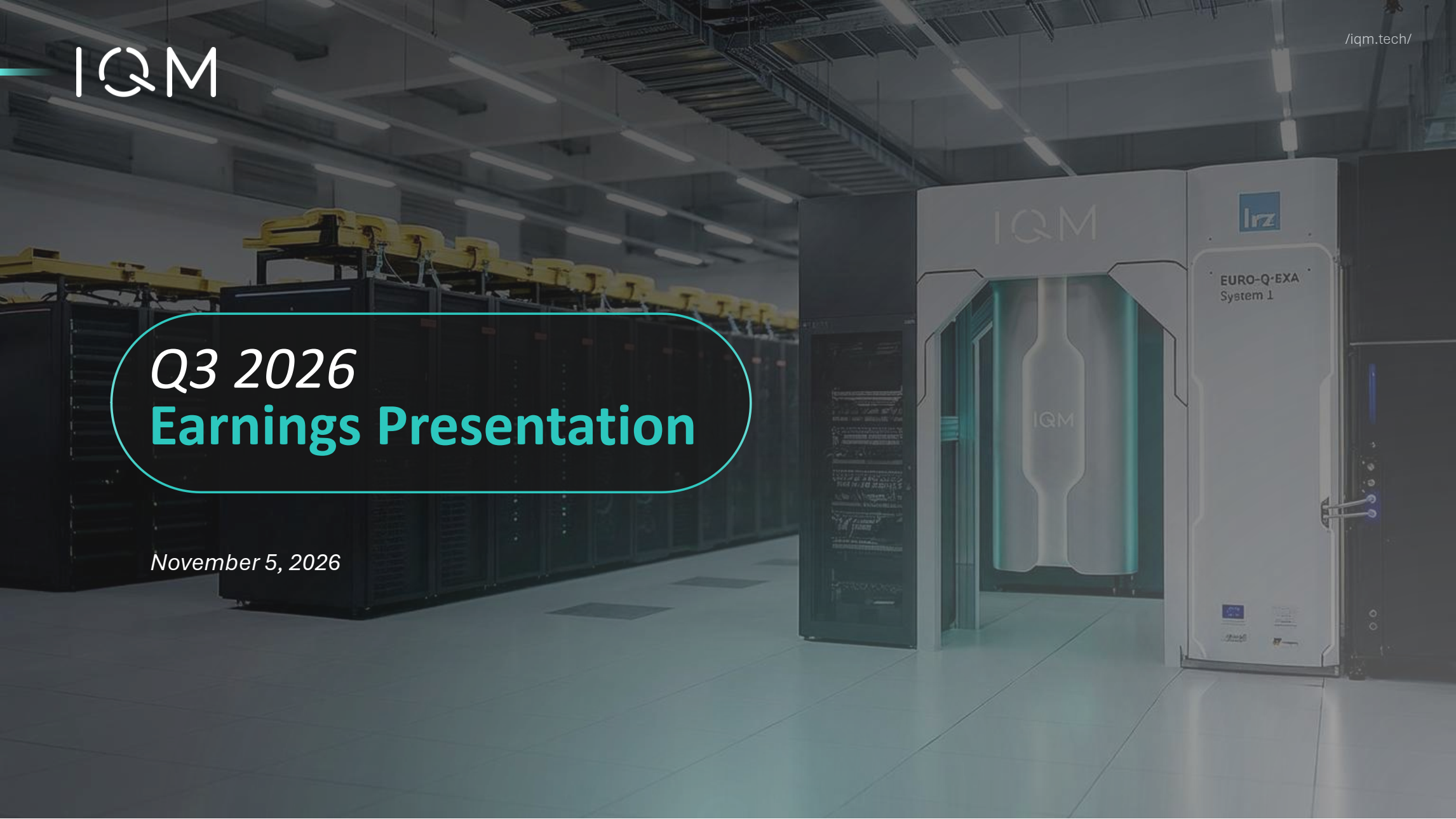
Following its recent sovereign supercomputing deal announcement, Finnish superconducting quantum hardware manufacturer IQM released its Q3 2026 financial results, reporting a 50.7% year-over-year revenue increase to €8.86 million, record quarterly order intake of €42.2 million, and a cumulative order backlog rising to €102.5 million[9]. The company officially secured a €33 million system contract with Finland's new AI computing center, announced an expansion into South America, and reaffirmed its full-year 2026 revenue guidance of €42 million to €47 million. A backlog exceeding €100 million demonstrates that tangible demand from national supercomputing centers across Europe and globally for on-premises full-stack systems is converting into bookings. Healthy cash receipts and backlog will widen IQM's lead over European superconducting peers, establishing a strong foundation for future large-scale capital raises on public markets[9].
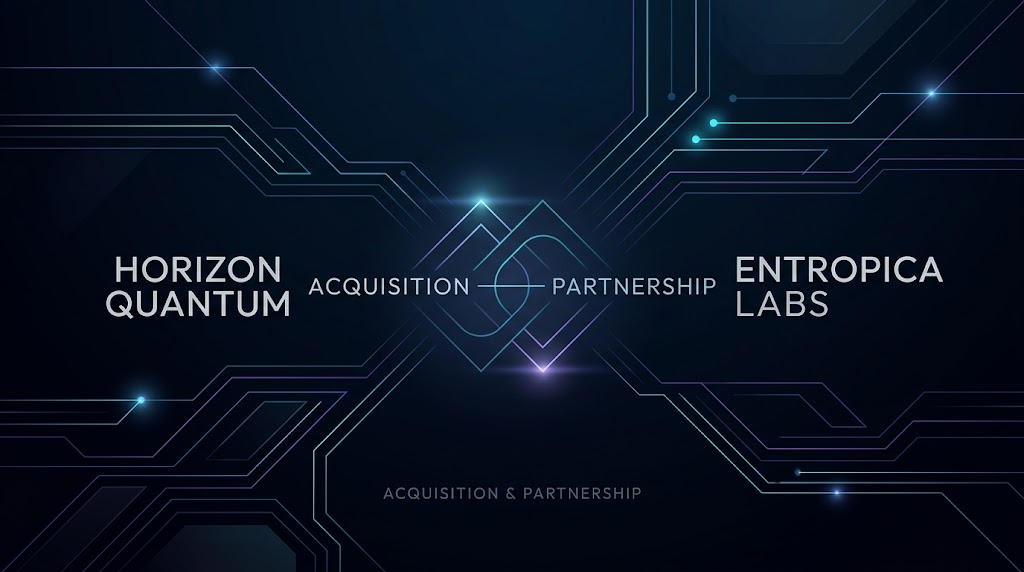
Following recent consolidation signals between two Singaporean software firms, quantum program synthesis startup Horizon Quantum signed a binding term sheet to acquire quantum error correction developer Entropica Labs in an all-stock transaction valued at $27 million[11]. Representing the largest M&A deal in Southeast Asia's quantum software sector, the transaction aims to merge Horizon's high-level language synthesis technology with Entropica's low-level hardware-aware error correction schemes to build an automated compiler spanning high-level application code down to fault-tolerant execution. The deal indicates that the quantum software sector is moving beyond point solutions toward integrated full-stack compilation environments, exerting consolidation pressure on standalone compiler startups across Europe and North America[11].
Nasdaq-listed neutral-atom quantum hardware maker Pasqal reported its Q3 2026 financial and operating metrics, showing a year-over-year revenue dip driven by cross-quarter acceptance cycles for multi-million-dollar on-premises system deliveries, while cloud-based Quantum Processing Unit (QPU) compute subscription revenue continued to grow[20]. This highlights the operational vulnerability of multi-million-dollar hardware sales models characterized by long cash-collection cycles and severe revenue lumpiness, whereas delivering neutral-atom arrays via on-demand cloud services is emerging as a critical pillar to smooth revenue volatility. Public market investors are re-evaluating listed hardware companies like Pasqal based on net retention rates of compute subscriptions, prompting hardware vendors to increase R&D investment into cloud usability and scheduler efficiency over the next three quarters[20].
The Monetary Authority of Singapore (MAS) issued a consultation paper titled Draft Notice on Post-Quantum Migration Guidelines and Roadmap for the Financial Sector to all licensed financial institutions in Singapore, formally setting regulatory requirements, phased milestones, and final compliance deadlines for post-quantum cryptographic upgrades of financial assets, with public consultation open until November 23, 2026[26]. This marks the first mandatory post-quantum compliance timeline enacted via formal regulatory notice by a premier international financial hub in Asia, signifying that post-quantum cryptography (PQC) in Asia-Pacific banking has transitioned from voluntary pilots to a statutory compliance mandate. The move is expected to drive billions of dollars in security procurement for core financial systems across Singapore over the next 3 to 5 years, directly benefiting top global cybersecurity vendors and post-quantum solution providers[26].
A security team developed a checkpoint authentication protocol named AMORT-V1 (a mechanism for segmented system integrity verification) that slashes the technical and hardware retrofit costs of upgrading industrial controllers to post-quantum defenses by a factor of 90 compared to complete rip-and-replace approaches[25]. By amortizing cryptographic verification overhead, the protocol removes the financial barrier for energy grids and manufacturing sectors that would otherwise require scrapping compute-constrained legacy microcontrollers (MCUs) and programmable logic controllers (PLCs) during PQC migration. This advance offers an actionable blueprint for water utilities, power grids, and petrochemical industrial sites globally to implement lightweight post-quantum defenses at minimal cost over the next 2 to 3 years[25].
At the UK National Quantum Technologies Showcase, five UK universities, led by the University of Cambridge, launched the "UK Quantum SuperConnector" commercialization alliance[35][37]; Innovate UK announced a new tranche of commercialization funding[38] and awarded an R&D contract to Toshiba Europe to support the deployment and technical validation of multi-user, long-distance quantum secure communications networks across operational industrial links[39]. This multi-pronged initiative cements the UK's full-chain support pipeline from university basic research to startup incubation and multinational industrial deployment, securing the UK's pivotal voice in shaping European quantum communication network standards[35][37][38][39].
Innovation Technical Industrial Corporation (ITIC), an investment arm of Taiwan's Industrial Technology Research Institute (ITRI), advanced the establishment of a Taiwan–UK Deep Tech Innovation Corridor, focusing on tightly coupling cutting-edge UK quantum science research with Taiwan's engineering manufacturing, microelectronics packaging capabilities, and venture capital[36]. This cross-regional partnership bridges the hardware prototyping gap for UK quantum startups lacking access to mature semiconductor foundries, while positioning Taiwan's semiconductor industry to secure future foundry orders for next-generation micro-nano integration and cryogenic control chips in the More-than-Moore era[36].
The academy arm of Indian quantum cybersecurity provider QNu Labs launched professional training courses in quantum security and cryptography for enterprise technical personnel, aimed at systematically developing engineers capable of hands-on PQC migration and QKD network operation[40]. The initiative reflects how the quantum information security sector is expanding from pure algorithm R&D into downstream deployment, engineering execution, and maintenance talent cultivation, helping alleviate the skilled engineering talent shortage faced by multinational enterprises upgrading their cryptographic infrastructure[40].