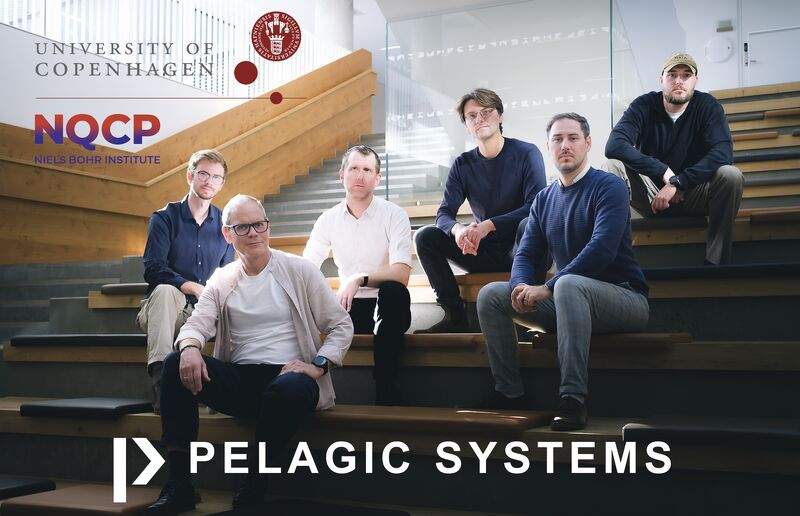
The Novo Nordisk Foundation Quantum Computing Programme (NQCP) officially spun out commercial entity Pelagic Systems, a company focused on commercializing platforms for real-time quantum processor control, multi-channel automated calibration, and hardware characterization, baking calibration routines directly into field-programmable gate array (FPGA, reconfigurable hardware control chips) controllers [20].
- Commercial implications: Reduces full-system calibration latency from host-based minutes down to onboard microseconds, resolving parameter drift and detuning caused by environmental fluctuations in superconducting and spin qubits, significantly decreasing routine system downtime for maintenance.
- Strategic impact: Marks the commercialization of low-level control and readout toolchains from top European research foundations, competing directly with UK and US quantum control software startups.
European quantum control automation software vendor QuantrolOx closed a €12 million Series A2 financing round, led by IW Capital with co-equity investment from the European Innovation Council (EIC) Fund. Funds will be directed toward accelerating global commercial expansion of automated hardware tuning tools and training specialized control and operations talent [28].
- Commercial implications: Co-investment from the official EU sovereign innovation fund provides credibility endorsement for low-level software middleware. Directing funds toward addressing operations talent shortages signals a transition for control software from point algorithm R&D toward scaled on-site engineering services.
- Strategic impact: Accelerates full-stack hardware vendors outsourcing calibration and maintenance; Matthew effects begin to emerge in the control software space, raising funding barriers to entry for subsequent software startups.
Dr. Stavroula Kampouridou, co-founder of Kelvin Quantum, received a £1.65 million Future Leaders Fellowship from UK Research and Innovation (UKRI), dedicated to developing cryogenic integrated quantum control and readout chips operating inside dilution refrigerators [22].
- Commercial implications: Conventional superconducting and silicon-based systems rely on hundreds or thousands of coaxial cables connecting room-temperature instrumentation to millikelvin stages, generating substantial thermal loads. Moving control logic down to 4 Kelvin and below is a critical engineering prerequisite for hardware scaling beyond thousands of qubits.
- Strategic impact: Ongoing UK government capital investment into the foundational quantum hardware supply chain benefits cryogenic semiconductor designers and reduces rack footprint requirements for thousand-qubit full-stack systems.
Japan's SoftBank Corp., together with five Japanese institutions, announced that their joint proposal was selected for a New Energy and Industrial Technology Development Organization (NEDO) national project, officially launching a three-year R&D effort (FY2026–2028) for a quantum computing materials development platform focused on EV batteries, optical devices, and superconducting materials [45].
- Commercial implications: A Japanese telecom and internet conglomerate heads a national industry-academia consortium to inject quantum algorithms and high-density computing platforms directly into high-value functional materials pipelines.
- Strategic impact: Shifts Japan's traditional material chemistry laboratories away from trial-and-error R&D models, with plans to establish a quantum-hardware-driven molecular database for advanced materials before FY2028.
The UK Space Agency and the Department for Science, Innovation and Technology (DSIT) jointly published the Space Quantum Technologies Roadmap targeting sovereign capabilities for 2035–2040, identifying four strategic investment pillars: precision timing, resilient sensing, sovereign space communications, and long-term spaceborne quantum computing [14].
- Strategic impact: Establishes technical standards and procurement cycles for the evolution of UK space systems toward space-qualified quantum payloads, channeling hundreds of millions of pounds in defense and space budgets toward radiation-hardened space quantum component vendors over the next decade.
German energy giant E.ON and Qoro Quantum announced the completion of a hybrid quantum-classical proof-of-concept for distributed peer-to-peer energy trading. Supported by the UK National Quantum Computing Centre's (NQCC) SparQ programme, they used spatial circuit packing optimization on IBM quantum hardware to reduce execution time to approximately one-third of prior levels [27][42].
- Commercial implications: Proves that software-level orchestration optimization can unlock utility-scale dispatch applications on existing noisy hardware, moving beyond sole reliance on hardware gate-speed improvements for cost reduction.
- Strategic impact: Establishes an empirical benchmark for quantum microgrid dispatch among European utilities, encouraging more distribution system operators (DSOs) to launch follow-on projects.
Japan's Shionogi & Co. won top prize in the Quality of Life category of the NEDO Challenge for its quantum-assisted drug discovery research using D-Wave quantum annealers [29][43].
- Commercial implications: Empirically validates the speed and solution quality of quantum annealing in combinatorial optimization for specific molecular conformations and target screening in an authoritative industry competition.
- Strategic impact: Boosts the commercial adoption of quantum annealing hardware, represented by D-Wave, across the pharmaceutical industry, shortening early-stage hit-to-lead and screening cycles for small molecules.
US-based Lumen Technologies (Nasdaq: LUMN) announced its network strategic roadmap, unveiling an overhaul of its backbone fiber network to support future distributed quantum computer interconnects and launching enterprise-grade post-quantum cryptography (PQC) migration services [41].
- Commercial implications: A traditional telecom backbone carrier transitions toward quantum-enabled network infrastructure, unlocking new revenue streams in high-bandwidth coherent quantum optical interconnects and defense-grade secure transmission.
- Strategic impact: Accelerates quantum-safe retrofitting of conventional data centers and cloud infrastructure, prompting enterprise customers to assess backbone quantum resilience.
Executives from Booz Allen Hamilton and US defense research institutions repeatedly emphasized that US federal agencies and the military must move beyond mere cryptographic inventory phases and accelerate system-level engineering migration to post-quantum cryptography [2][5], while trapped-ion hardware vendor IonQ announced external quantum-secure key protection solutions for critical network corridors [4].
- Strategic impact: Policy and national defense tailwinds are rapidly converting into tangible contracts for defense contractors and cryptography providers, generating an immediate incremental market for cryptographic migration.