Information Security and Cryptographic Migration
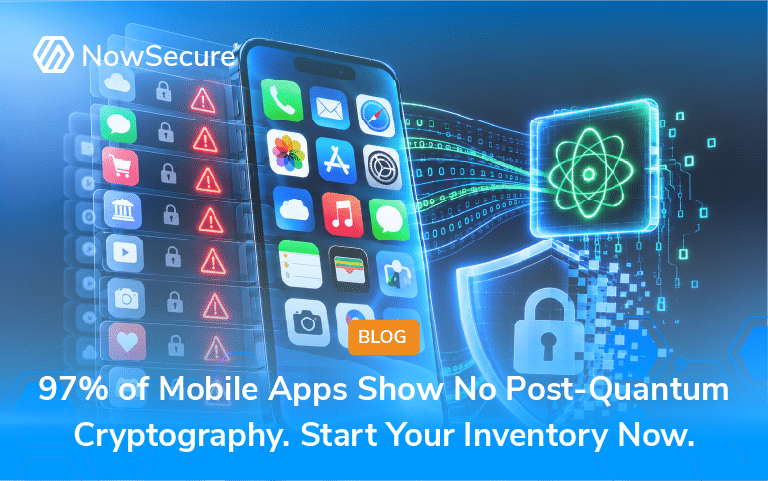
Benchmark of 136,000+ Mobile Apps Reveals 97% Lack Post-Quantum Defenses[8]
Mobile security vendor NowSecure published a post-quantum security audit benchmark report covering more than 136,000 mainstream mobile applications globally. Test data shows that 97% of mobile apps entirely lack post-quantum cryptography (PQC, post-quantum cryptographic algorithms), leaving them vulnerable to future computational decryption[8].
Technical and Commercial Implications: The root security risk stems from mobile apps' ubiquitous, heavy reliance on third-party software development kits (SDKs) and precompiled static code libraries, which standard code-scanning tools cannot penetrate. With US federal agencies enforcing strict PQC compliance deadlines for 2030–2031, this "mobile security fault line" threatens to prevent the vast majority of mobile applications from achieving timely compliance[8].
Landscape Impact: Banking, mobile payment, digital identity, and social media enterprises face massive architectural refurbishment and compliance audit expenditures over the next 3 to 5 years, sparking a $100B-scale mobile security refactoring market[8].
Toshiba Launches Modular Quantum-Safe Network Platform Enabling Co-Propagation over Commercial Lit Fiber[13]
Following earlier reports on Toshiba's quantum security initiatives, Toshiba officially commercialized its modular Quantum-Safe Network (QSN) platform. The platform overcomes strong interference from classical backscattering on fragile single-photon signals, enabling the co-propagation of Quantum Key Distribution (QKD, physics-based photonic secure communications) and post-quantum encrypted traffic over existing commercial lit fiber without requiring dedicated dark fiber[13].
Commercial Implications: This eliminates the steep deployment and operational expenses associated with leasing dedicated fiber links in conventional QKD networks, substantially lowering upfront hardware retrofitting costs and offering telecom operators a plug-and-play, seamless migration pathway[13].
Landscape Impact: The capital barrier for major European and Asia-Pacific telecom carriers to deploy physics-level quantum-safe backbones is significantly leveled, accelerating large-scale procurement tenders for metropolitan financial networks and data center interconnect (DCI) infrastructure[13].
Arqit Makes Strategic Investment in Tactical Edge Developer Sirius to Solidify NATO Cryptographic Position[9]
Following its selection for a NATO post-quantum defense security supply contract, quantum encryption provider Arqit made a strategic investment in Sirius Computer, a tactical communications hardware and software developer, to co-develop post-quantum tactical edge encryption suites tailored for frontline defense and intelligence terminals[9].
Commercial Implications: By retrofitting existing tactical handhelds and vehicle-mounted communications nodes via lightweight software key protocols, the initiative bypasses the immense fiscal burden and protracted procurement cycles of full-scale military-grade hardware overhauls[9].
Landscape Impact: This establishes a commercial blueprint for lightweight, pure-software encryption upgrades in military communications, exerting substitution pressure on traditional defense communications giants reliant on hardware replacement cycles[9].
Digital Asset Insurer Relm Incorporates Post-Quantum Metrics into Underwriting Pricing Models[11]
Cybersecurity risk modeling firm Project Eleven entered into a strategic partnership with Relm Insurance, a specialized offshore digital asset insurer, officially integrating institutional post-quantum cryptographic readiness into actuarial risk assessment and pricing models for digital asset custody and exchange insurance policies[11].
Commercial Implications: By offering premium discounts and dynamic deductibles, this directly reduces operating premiums for digital asset institutions that complete PQC migrations, pioneering a virtuous business cycle where technical security investments translate directly into balance-sheet cost savings[11].
Landscape Impact: This compels cryptocurrency exchanges and custody banks managing tens of billions in assets to initiate underlying public-key migrations within 12 to 18 months, shifting financial cryptographic upgrades from compliance-driven mandates to economic incentives[11].
Investment, Policy, and Regulation
California Allocates $5.74M to Build Associate- and Technician-Level Quantum Hardware Workforce Pipeline[5]
The California Workforce Development Board formally approved $5.74 million under Phase 14 of the Workforce Accelerator Fund across five regional educational and industrial consortia, targeted at establishing a talent pipeline for associate- and technician-level hardware manufacturing and maintenance[5].
Commercial Implications: Public subsidies are shifting down from high-level theoretical research (PhD-level) toward hands-on frontline manufacturing, establishing industry-recognized modular credentials for production-line specialties such as dilution refrigerator assembly, high-frequency microwave cabling, and vacuum chamber commissioning[5].
Landscape Impact: California-based quantum hardware firms will gain access to a pool of low-cost, specialized technicians within 1 to 2 years, substantially diluting the high labor expense of utilizing full-time PhDs for routine baseline assembly[5].
US Congress Passes NDAA Directing Treasury to Tighten Scrutiny on Outbound Quantum Investments[15]
Under statutory directives in the FY2026 National Defense Authorization Act (NDAA), the US Department of the Treasury formally released proposed update rules for the Outbound Investment Security Program, comprehensively tightening capital look-through reviews targeting core overseas quantum computing technologies[15].
Commercial Implications: The scope of scrutiny expands beyond early-stage direct equity investments to encompass limited partner (LP) capital participation, joint offshore laboratory establishments, and cross-border cross-licensing of core patents, significantly lengthening due diligence compliance timelines[15].
Landscape Impact: Dual-currency operations of global venture capital funds in the quantum deep-tech sector are experiencing complete decoupling, forcing startups to establish clean, single-jurisdiction capital structures at early stages[15].
Investment Bank Evercore Analyzes Quantum Valuation Anchor Has Shifted to 2030 Revenue Multiples[26]
Mehmet Sanliol, Managing Director at investment bank Evercore, noted in an industry interview that the capital market's valuation logic for publicly traded quantum computing companies is undergoing a fundamental shift: pivoting away from early speculative long-term concept visions toward strict anchoring to 2030 commercial revenue multiples, entering an industry-wide phase of shakeouts and M&A consolidation[26].
Commercial Implications: The SPAC window has largely closed, and early-stage pure-hardware teams burning cash without established industrial customer subscription revenue face severe liquidity crisis risks over the next 12 to 24 months[26].
Landscape Impact: Traditional semiconductor design firms, supercomputing centers, and cloud computing giants will acquire liquidity-starved niche hardware startups at deep discounts, significantly accelerating the industry's Matthew effect[26].
Institutional Moves and Geopolitical Collaborations
EY, Zapata, IQM, and Sparrow Announce Senior Executive and Scientific Advisory Appointments[6]
Multinational consulting giant Ernst & Young (EY) appointed Dr. Philip Intallura as Partner and Global Quantum Leader; Zapata Quantum appointed prominent scholars, including Dr. Peter Shor, inventor of Shor's algorithm, to its Scientific Advisory Board; European superconducting hardware manufacturer IQM brought in Dr. Voica Radescu as Director of Commercial Partnerships; single-photon source developer Sparrow Quantum promoted Prof. Peter Lodahl to Chief Executive Officer; and cybersecurity provider Symmatrics appointed Andrew Hallman to its Strategic Advisory Board[6].
Commercial Implications: Consulting powerhouses and hardware manufacturing frontlines are aggressively bolstering commercial leadership teams and securing top-tier scientific endorsements, signaling that enterprise services are transitioning from isolated proof-of-concept (PoC) engagements toward scaled corporate client expansion and commercial delivery[6].
Landscape Impact: This accelerates the penetration of quantum strategic consulting at the board level of Fortune 500 enterprises, further widening the gap in market influence and fundraising appeal enjoyed by leading startups[6].
Vietnam and Rosatom Finalize Cooperation Roadmap for Remote Quantum Computing Access[12]
The Vietnamese government and Russia's State Atomic Energy Corporation (Rosatom) finalized a bilateral quantum cooperation development roadmap. Under the agreement, Vietnamese research and engineering teams will gain direct remote access to Russian domestic quantum processors, with plans to co-establish a physical technology laboratory in Hanoi in support of Vietnam's National Strategy 2045[12].
Commercial Implications: Emerging developing nations can rapidly cultivate quantum software development talent via compute leasing and sponsored training programs without shouldering the capital-intensive burden of multi-hundred-million-dollar hardware fabrication facilities[12].
Landscape Impact: Russian computing power is establishing a commercial footprint in the Southeast Asian geotech market, breaking Western cloud providers' regional monopoly and driving geopolitical diversification across the Asia-Pacific compute landscape[12].
UK and Singapore Hold 11th Financial Dialogue to Deepen Digital Finance and Quantum Technology Collaboration[21]
The United Kingdom and Singapore held their 11th Financial Dialogue, with regulatory authorities from both nations announcing regularized operational coordination across critical areas, including fintech regulation, quantum computing technology adoption, and cross-border capital market interoperability[21].
Commercial Implications: The two offshore financial hubs are jointly driving post-quantum security assessment standards and financial algorithm sandboxes, ensuring cross-border clearing and settlement networks maintain cryptographic compatibility against future decryption threats[21].
Landscape Impact: This establishes a bilateral compliance baseline for post-quantum retrofitting of multinational banks and financial infrastructure, providing an empirical reference for future unified global financial defenses developed by the Bank for International Settlements (BIS)[21].