Oct 7, 2026 – Oct 8 · Daily Brief

How Long Can Banking Passwords Hold? US Military Sets a Seven-Year Deadline for Practical Application

52 items · 11 sourcesPDFThis issue's roundup is free
02Hardware

Hardware Frontiers

Trapped Ion

Infineon Technologies and Swiss hardware startup ZuriQ AG announced a deepened strategic collaboration on October 8, 2026 (Beijing Time) to advance the industrial mass production of 2D trapped-ion Penning micro-traps leveraging Infineon’s standard semiconductor fabrication and packaging lines, successfully completing chip-scale verification of a 3×3 array (9 physical sites)[15]. Regarding technical benchmarks, commercial trapped-ion systems (such as Quantinuum Helios’s 98-physical-qubit all-to-all connected architecture) predominantly employ 1D shuttling micro-traps, where physical scaling is constrained by anomalous heating in long ion chains; this breakthrough validates a 2D grid micro-trap at the chip scale, yet remains limited to 9 trapping sites—far below Helios's 98 physical qubits—and has not disclosed measured two-qubit gate fidelities (benchmarks: Helios median all-to-all fidelity of 99.921%, IonQ best single-pair record of 99.99%), while on-chip high-resolution optical addressing and high-speed 2D grid ion transport remain unverified for fault-tolerant architectures[15]. This milestone marks European foundry capacity formally entering the second-generation trapped-ion chip supply chain, directly challenging capex-heavy proprietary packaging models and lowering tape-out barriers for peer enterprises within two to three years[15].

Photonic Quantum

A research team developed a high-temporal-resolution superconducting nanowire single-photon detector (SNSPD) that narrows timing jitter to under 41 ps during multi-photon incident events (two or more photons) and directly resolves 1, 2, or 3 photons with 99% confidence without requiring post-processing software algorithms[19]. Conventional single-photon detectors only distinguish between the presence and absence of light, with photon-number resolution typically relying on spatial array multiplexing or computational post-processing introducing microsecond-scale latencies; this development elevates multi-photon resolution confidence to 99% while compressing temporal precision to under 41 ps[19]. In terms of system-level benchmarking, frontier photonic standards (such as PsiQuantum Omega's 99.98% state preparation and measurement fidelity and 99.22% fusion fidelity on 300 mm wafers) require closed-loop end-to-end loss budgets; this detector still requires verification of its end-to-end optical loss budget integrated with photonic chips[19]. This metric will directly empower measurement-based quantum computing by eliminating the post-processing latency of decoding circuits, with integration into fault-tolerant photonic prototypes expected within two years[19].

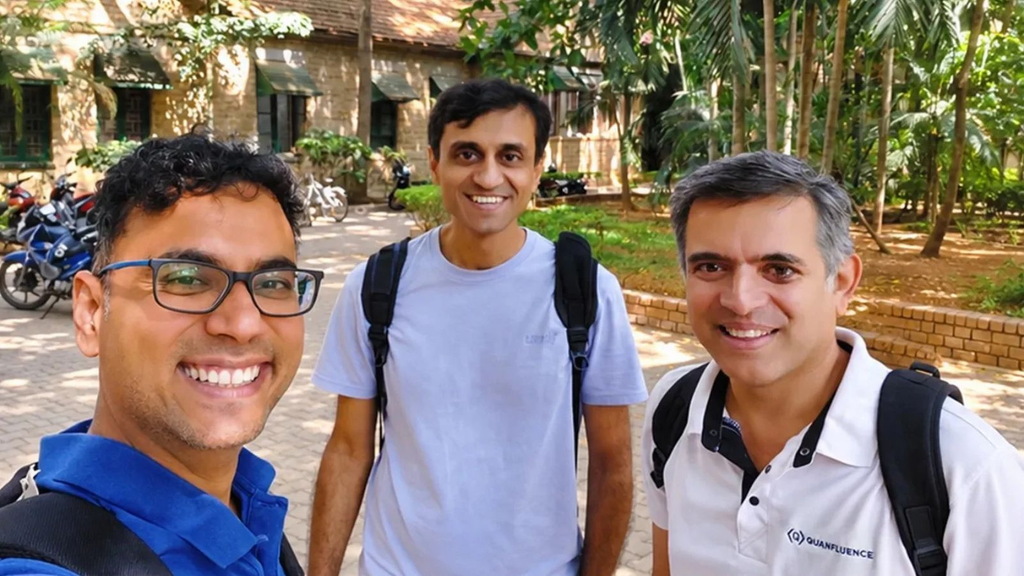
Bengaluru-based hardware startup Quanfluence closed a $10 million Series A funding round led by Chiratae Ventures, with participation from Pi Ventures and Zerodha’s Rainmatter, to develop a full-stack photonic quantum computing system integrating proprietary photonic integrated circuits (PICs), electronic control silicon, and low-level algorithms[13]. In terms of maturity, the company is transitioning from discrete components to co-packaged optics, whereas global state-of-the-art systems (such as Xanadu's Aurora linking 35 chips and 12 qubits across 13 km of optical fiber, and PsiQuantum scaling on 300 mm production lines) hold a three-to-five-year lead in integration; Quanfluence has yet to disclose its two-photon indistinguishability (industry benchmark: 99.50%) and end-to-end optical loss budgets, leaving a substantial gap before demonstrating logical error-corrected units[13]. This funding highlights South Asian early-stage deep-tech capital accelerating the establishment of sovereign regional photonic hardware nodes, targeting an initial photonic processor by 2027 and a scalable fault-tolerant system by 2029[13].

Silicon Spin & Macroscopic Quantum Physics

A research team proposed a variational wavefunction computational model for silicon qubits under confined and strained potential landscapes; its energy-level predictions achieve over 99% agreement with exact diagonalization numerical simulations (error < 1%), capturing non-perturbative physical effects omitted by prior models and revealing that the interface exhibits "asymptotic freedom" under high-amplitude applied electric fields[26]. The primary fabrication bottleneck for silicon quantum dots stems from severe fluctuations in valley splitting (conduction-band degeneracy lifting) induced by atomic-scale interfacial roughness; this method compresses the theoretical prediction error of valley splitting to within 1% for the first time[26]. Compared to SOTA baselines where Diraq demonstrated two-qubit gate fidelities exceeding 99% on 300 mm wafers, silicon spin architectures remain experimentally limited to approximately 12 entangled qubits; this model provides a simulation tool to suppress physical defects, anticipated to shorten device iteration cycles by roughly 18 months across silicon CMOS pathways[26].

Physicists observed, under laboratory conditions via precision optical and magnetic resonance manipulation, that microscopic quantum spin angular momentum transfer directly drives the mechanical displacement of centimeter-scale macroscopic objects for the first time[5]. This marks experimental physics recording a macroscopic mechanical response induced purely by quantum spin at a visually observable centimeter scale, transcending the decoherence boundary governing the transition from microscopic quantum superposition to macroscopic classical mechanics[5]. This finding opens a physical pathway toward high-sensitivity quantum mechanical sensors and ultra-precision inertial navigation units that operate without cryogenic environments, expected to impact precision metrology instrument development within five years[5].

03Algorithms

Algorithms & Software

Cisco’s Outshift division released v0.2.0 of its multi-node quantum network controller and network-aware compiler, introducing an "Entanglement-as-a-Service" architecture that supports on-demand entanglement generation across heterogeneous quantum hardware while tightly coupling low-level quantum circuit compilation, qubit logical partitioning, and distributed quantum error correction[8]. This marks the first time a networking infrastructure giant has integrated datacenter routing protocols with multi-chip distributed error-correction algorithms at the compilation layer, filling a middleware void in multi-processor cluster interconnect scheduling[8]. This initiative drives distributed quantum computing toward Ethernet-grade standards, directly influencing software specifications for datacenter heterogeneous compute cluster interconnects[8].

Quantum software firm Haiqu launched its AgenticOS platform, utilizing dedicated automated agent clusters and a test-driven development framework to enable autonomous end-to-end orchestration and verification of complex computational workflows, successfully executing simulations of proton transfer reactions and the Fermi-Hubbard model (a strongly correlated lattice model)[14]. The platform improves code generation and physical conservation verification efficiency for molecular chemistry simulations multi-fold compared to manual programming, eliminating human logic flaws[14]. This tool substantially lowers the technical threshold for pharmaceutical enterprises adopting quantum chemistry algorithms, presenting commercial disruption to traditional software consulting contractors[14].

A study published in Quantum proposed a multi-copy joint measurement protocol that significantly reduces system sampling complexity through simultaneous probe measurements of non-commuting Pauli operators (incompatible fundamental quantum measurement bases)[17]. In the Variational Quantum Eigensolver (VQE, a hybrid algorithm for molecular ground-state energy computation), non-commuting measurement operators conventionally force systems to execute hundreds of thousands of repeated sampling shots; this method demonstrates for the first time that multi-copy access bypasses the sample overhead lower bound of single-copy measurements[17]. This will reduce required machine runtimes for molecular energy calculations multi-fold, directly benefiting near-term materials simulation workloads on noisy intermediate-scale hardware[17].

Researchers developed a novel combinatorial optimization solver achieving an approximation ratio exceeding 0.95 across four complex network benchmark classes (G1, G6, G12, and G18), outperforming classical algorithms such as tabu search and random search in solution quality[28]. This achievement demonstrates that classical heuristics incorporating quantum entanglement correlation mechanisms can closely approximate theoretical extrema, providing an off-the-shelf solver for financial portfolio allocation and traffic routing while presenting near-term commercial competition to hardware startups centered on quantum annealing[28].

The open-source Eclipse Foundation announced that Eclipse Qrisp, a high-level quantum programming framework initiated by Germany's Fraunhofer Institute, was awarded the Quantum Effects 2026 Algorithm and Software Award[42]. Qrisp eliminates low-level gate-level hardcoding via high-level data structure encapsulation and supports automated resource estimation, reinforcing European open-source autonomy across cross-architecture compilation layers[42].

A study published in npj Quantum Information introduced high-order Magnus expansions into time-dependent Hamiltonian evolution simulations, substantially reducing the truncation error order introduced by time discretization and compressing circuit logic gate depths by an order of magnitude for field-driven systems, offering a low-depth algorithmic primitive for simulating non-equilibrium materials physics on superconducting processors[2].

04Industry

Industry & Ecosystem

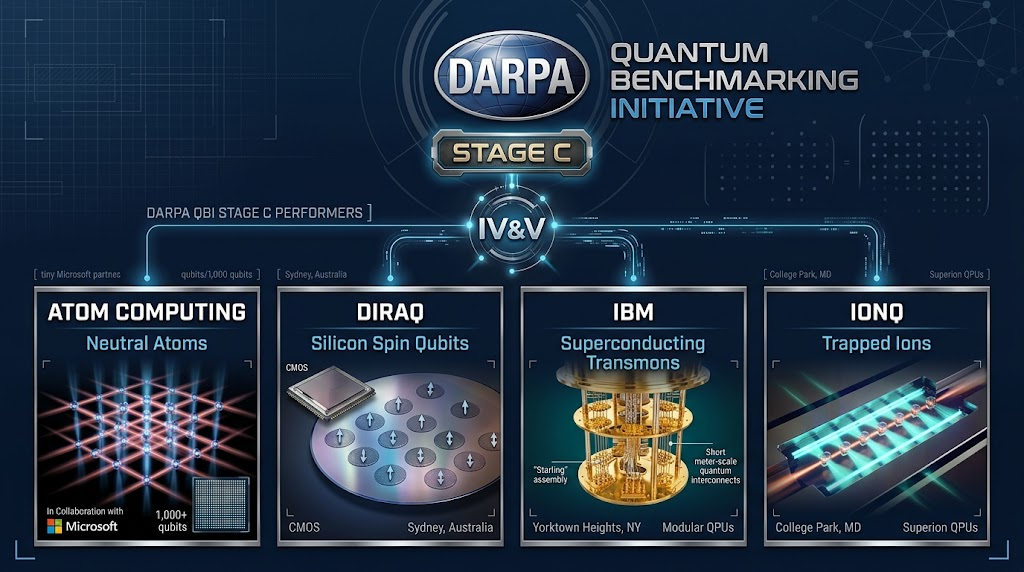
DARPA announced that its Quantum Benchmarking Initiative has entered final Stage C verification, selecting four hardware vendors—Atom Computing (neutral atom), Diraq (silicon spin), IBM (superconducting), and IonQ (trapped ion)—for direct physical benchmarking and empirical validation to comprehensively quantify the technical viability of each architecture reaching utility-scale fault-tolerant operation before 2033[16]. Benchmarked against hardware baselines, the four selected vendors represent state-of-the-art industrial maturity within their respective paradigms: Atom Computing features 1,180 physical qubits and 24 entangled logical qubits but is constrained by a 1–10 Hz cycle repetition rate; Diraq achieves 99% gate fidelity on 300 mm wafers but operates arrays limited to single-digit qubits; IBM deploys its 120-qubit Nighthawk processor but faces coherence time fluctuations from two-level system defects; and IonQ reaches a 99.99% single-pair gate fidelity but encounters latency bottlenecks in large-scale ion shuttling[16]. DARPA's 2033 utility deadline establishes the first global cross-modality physical elimination filter; unselected vendors will face dual headwinds of shrinking defense contracts and diverted private venture capital, while the final four consolidate control over next-generation fault-tolerant architectures[16].

KQC Quantum, Inc., the parent company of South Korea Quantum Computing, signed a definitive merger agreement on October 8, 2026 (Beijing Time) with Charlton Aria Acquisition Corporation (NASDAQ: CHAR), a publicly traded special purpose acquisition company, to execute a listing on Nasdaq via a de-SPAC transaction[41]. This represents the first Asian quantum technology enterprise combining hardware compute deployment and post-quantum security services to pursue a U.S. de-SPAC listing, establishing a direct financing channel to global public capital markets for Asia-Pacific quantum firms and signaling cautious secondary-market appetite for assets generating near-term post-quantum commercial cash flows[41].

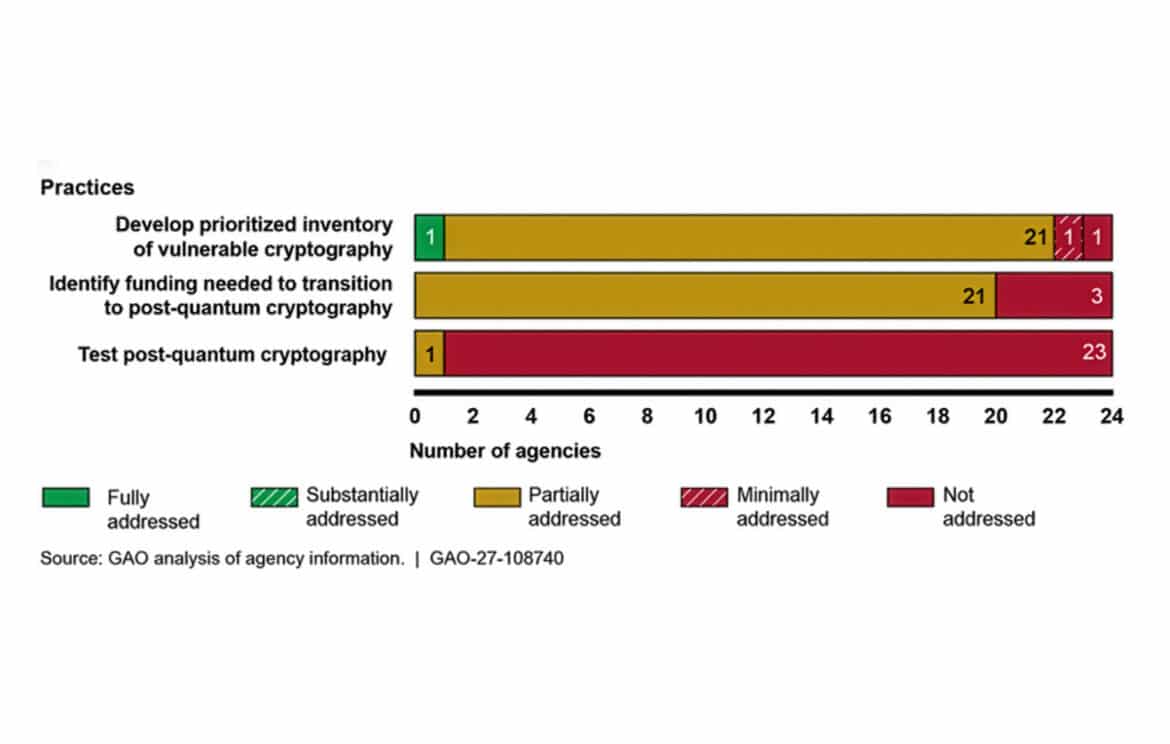
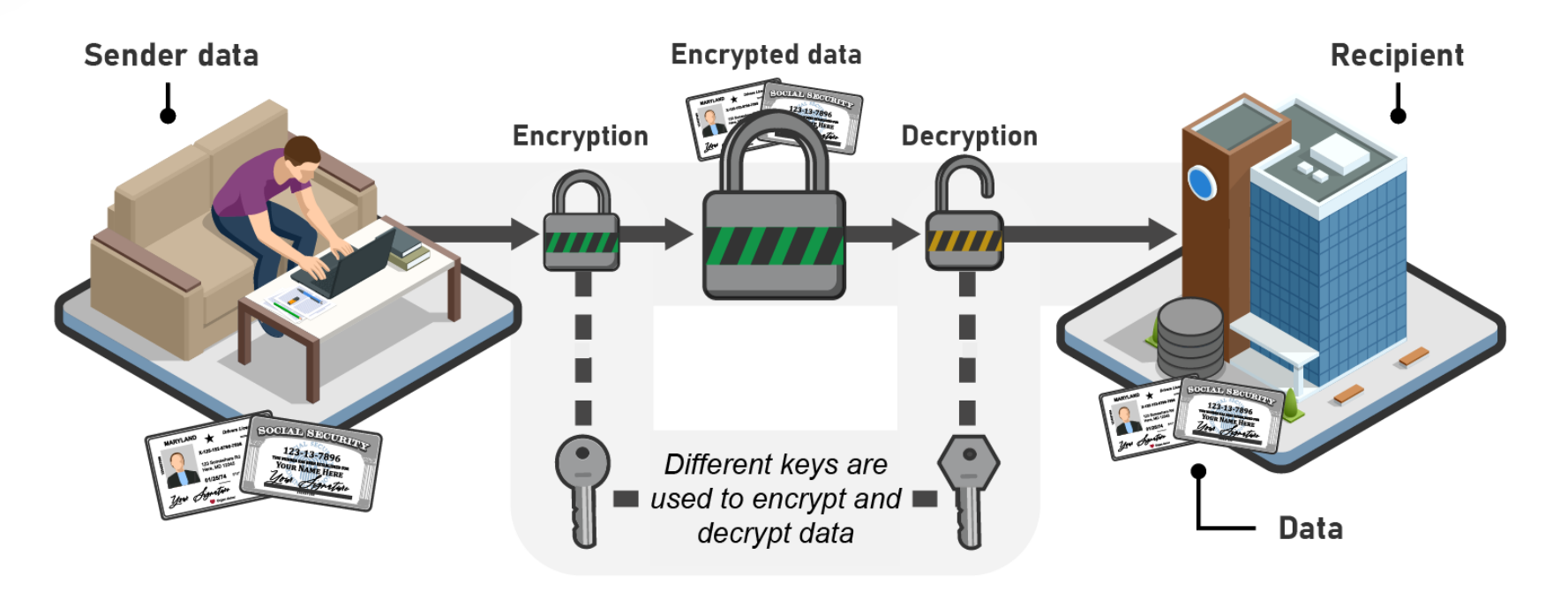
The Saudi Central Bank (SAMA) issued a mandatory regulatory directive to supervised commercial banks requiring financial institutions to immediately initiate cryptographic asset inventories to quantitatively evaluate their cryptographic vulnerability exposure to future quantum computing decryption risks across financial transaction verification and confidential data[29]. The escalation of regulatory compliance from industry discussions to mandatory audits indicates that sovereign Middle Eastern financial systems have formally initiated their post-quantum cryptography migration roadmaps, though specific compliance modernization timelines and procurement scales were not disclosed[29].

Digital asset security provider Project Eleven officially launched Strongpoint, an institutional-grade post-quantum custody platform, designating the Zcash Foundation as its launch development partner to construct an agile post-quantum cryptographic control layer for blockchain networks, slated for deployment in Q4 2026[11]. This collaboration marks the first implementation of post-quantum signature protections across the core custody layer of a major privacy cryptocurrency network, driving multi-hundred-billion-dollar digital asset custodians to re-architect security baselines[11].

UK digital asset infrastructure platform Zumo announced a strategic partnership with Quantum Chain to deploy quantum-resistant financial infrastructure for UK-regulated institutions and payment rails, focusing on securing central bank digital currency (CBDC) settlement and tokenized asset clearing networks[12]. The project embeds post-quantum protections into UK financial compliance workflows, accelerating modernization across traditional banking clearance systems[12].

French photonic quantum system manufacturer Quandela signed a Memorandum of Understanding (MoU) with the Korea Research Institute of Bioscience and Biotechnology (KRIBB) on September 8, 2026 (Beijing Time) to integrate advanced algorithms, high-performance computing, and photonic quantum hardware for biomacromolecular simulation and drug discovery[30]. This indicates European hardware vendors are accelerating penetration into Asia-Pacific national biomedical research networks, pursuing commercialization models based on compute capacity leasing coupled with joint IP[30].

The 4,500-square-foot QuantumCT innovation headquarters was officially inaugurated in New Haven, Connecticut, supported by $50.5 million in direct state appropriations from Connecticut and a $15 million award from the U.S. National Science Foundation, establishing an innovation hub equipped with hardware testbeds and incubators that intensifies inter-state competition for core quantum industrial assets across the United States[9].

Chandigarh University’s CUBIC in India established a strategic partnership with 247VC Investment Trust, creating a dedicated track at the PRAGATI Q-Foundry conference to bridge early-stage angel investment channels for incubating academic research into industrial deep-tech startups[10]. Meanwhile, the UK National Quantum Technologies Programme public platform Quantum City completed a full relaunch, releasing industry skill certifications and career pathway guides aimed at mitigating domestic engineering talent shortages across hardware manufacturing and error-correction algorithms[43].

05Other

Academic Frontiers

Research teams led by Biao-Le Zhang at Nanyang Technological University, Singapore, and Jian-Hua Jiang at the University of Science and Technology of China published two independent papers in Nature, in collaboration with Xue-Jia Yu of Ningbo Eastern Institute of Technology, experimentally confirming via acoustic metamaterial lattices that topological edge states can persist stably at gapless critical points under the protection of geometric invariants[4]. This finding overturns the long-standing condensed matter paradigm that "gap closure inevitably invalidates topological invariants," providing a new physical foundation for designing gapless, noise-resilient topological acoustic and quantum devices[4].

An experimental physics team, operating at ambient temperature using optical microcavities coupled with feedback cooling, achieved stable macroscopic quantum entanglement between an optically levitated glass nanosphere in vacuum and an incident laser field for the first time[6]. This marks the first room-temperature generation of quantum entanglement between a mesoscopic solid-state macroscopic particle and an optical field, surmounting the physical hurdle where macroscopic coherence is readily disrupted by thermal fluctuations at room temperature, substantially reducing the reliance of ultra-sensitive optomechanical sensors on dilution refrigerators, and enabling cryogenic-free hardware implementations for inertial navigation and quantum repeaters[6].

A research team at Okayama University in Japan applied a +0.90% tensile strain to the kagome-lattice superconductor CsV3Sb5, successfully decoupling two previously overlapping hidden superconducting states and elevating its superconducting transition temperature from 3.0 K in the unstrained state to 3.6 K (a 20% relative increase)[24]. The experiment demonstrates that elastic strain can precisely reshape the Fermi surface and decouple competing quantum orders, providing a solid-state property control mechanism for tuning topological superconducting devices and developing low-loss quantum interconnects[24].

Theoretical researchers proved that under shared randomness, the copy complexity required for multi-party distributed verification of an unknown quantum state scales as Θ((d²)/(2^(n_q) 2^(n_c/2) ε²)), a bound that differs from the private-coin setting by only a factor of √log d[27]. This work establishes near-optimal data bounds for verifying quantum states in strictly communication-constrained networks, providing theoretical limits for distributed quantum network benchmarking and multi-node blind quantum computing protocols[27].

Through rigorous mathematical derivations, theoretical physicists superseded the conventional approximation treating spatial decoherence as instantaneous (τ=0), demonstrating that under the limit of infinite coupling strength, the loss of quantum coherence in many-body systems is not instantaneous but unfolds continuously across a well-defined timescale τ=λt[31]. This finding resolves a long-standing decoherence singularity assumption in many-body dynamics, providing microscopic theoretical backing for designing higher-precision active dynamical decoupling pulse sequences in dense multi-qubit arrays[31].

Physical characterization of the candidate topological superconductor uranium ditelluride (UTe2) revealed that after bulk macroscopic superconductivity is entirely quenched, Cooper pair density waves (superconducting electron pair density waves) anomalously persist, challenging the conventional view that paired states dissociate concurrently with the breakdown of bulk superconducting phases and offering insights into broad-temperature topological protection for spin-triplet qubits[25].

A joint study by Tampere University, Harvard University, and TU Dresden revealed that quantum systems permanently retain "quantum birthmarks" encoding their initial state signatures, even following extended, violent many-body chaotic evolution[22]. This finding challenges the premise that chaos inevitably erases a system's initial information, aiding the exploitation of intrinsic memory properties to reconstruct corrupted states during error-corrected operations and refining state-reconstruction algorithms in complex quantum simulations[22].

Theoretical work demonstrated that a novel estimator for characterizing complex quantum system parameters exhibits dominant errors converging strictly to the Quantum Cramér-Rao Bound, with higher-order errors decaying significantly faster than prior estimators, overcoming the diminishing-returns bottleneck associated with vast measurement sample copies and directly benefiting data demodulation in high-precision quantum gyroscopes and atomic clocks[18].

A study published in npj Quantum Information utilized the high-dimensional orbital angular momentum states of photons (high-dimensional qudits) to achieve a proof-of-concept demonstration of the Subspace-Search Variational Quantum Eigensolver (SS-VQE), mapping complex molecular excited states onto single-photon high-dimensional Hilbert spaces and circumventing the linear hardware scaling associated with multi-qubit two-level systems[3].

A theoretical team proposed an algorithmic shortcut for simulating high-energy particle collisions, dramatically reducing the quantum gate depth required to evaluate final-state scattering matrices, bypassing the exponential classical computational explosion of full-phase-space particle production, and establishing a dedicated algorithmic interface for future collider data analysis[7].
06Impact

Today's Impact

  1. Global Fault-Tolerant Hardware Race Enters Empirical Benchmarking Trials; Tier-Two Architectures Face Capital Flight: Impacted parties include global quantum hardware developers and deep-tech venture capital funds. DARPA formally confirmed neutral atoms (Atom Computing), silicon spin (Diraq), superconductors (IBM), and trapped ions (IonQ) as the four architectures advancing to Stage C physical benchmarking[16]. The window for relying on isolated single-metric promotional claims has closed; unselected alternative modalities and mid-tier vendors will face tightening public funding and diverted private capital as resources concentrate heavily among the four leaders. The next critical milestone will be the initial physical benchmarking calibration data released by DARPA in 2027.
  2. Financial Cryptographic Infrastructure Compliance Accelerates as Post-Quantum Migration Shifts to Mandatory Enforcement: Impacted parties include commercial banks, central bank digital currency (CBDC) clearing houses, and digital asset custody providers. The Saudi Central Bank (SAMA) mandated quantum vulnerability inventory audits[29], the Zcash Foundation partnered with Project Eleven to deploy institutional post-quantum custody[11], and the UK's Zumo advanced post-quantum defenses for tokenized assets[12]. Post-quantum cryptography is no longer confined to standards deliberations; it has become an explicit prerequisite for banking licenses and risk compliance. Stakeholders should monitor whether Middle Eastern, European, and U.S. regulators expand audits to cross-border payments and core banking ledgers before 2027.
  3. 2D Grid Chips Materialize as Trapped-Ion Moves from Discrete Assemblies to Foundry Fabrication: Impacted parties include trapped-ion hardware developers and semiconductor foundries. Infineon and ZuriQ successfully validated a 3×3 2D Penning micro-trap chip[15], marking a shift from 1D long chains and mechanical shuttling to planar semiconductor integration. Heavy capex cleanroom models face disruption as standardized foundry fabrication and advanced packaging emerge as the primary cost-reduction roadmap. Future attention must center on whether measured single- and two-qubit gate fidelities exceed the 99.9% threshold under strong magnetic fields on these chips.
  4. Photonic Quantum Detection Clears Hardware-Level Resolution Thresholds, Accelerating Measurement-Based Error-Correction Cycles: Impacted parties include photonic quantum computing and continuous-variable quantum key distribution research groups. An SNSPD achieved direct resolution of 1 to 3 photons within 41 ps at 99% confidence[19], eliminating computational post-processing latency. Next phases must monitor end-to-end optical insertion loss management across integrated systems and multi-channel cryogenic power dissipation.
07Other

Editorial Commentary

The global quantum technology ecosystem is undergoing a pronounced shift toward industrial rigor and capital consolidation. The permissive era of relying on single-point physical qubit scaling or isolated laboratory metrics has closed, replaced by rigorous physical benchmarking and manufacturability assessments governed by sovereign institutions. Whether evidenced by defense agencies enforcing a 2033 utility deadline across four mainstream pathways, or semiconductor wafer giants deeply embedding into 2D micro-trap chip tape-outs, the locus of competition in fault-tolerant quantum computing has decisively shifted from proof-of-concept prototypes to industrial engineering criteria defined by 300 mm foundry yields, 2D grid addressing, and microsecond-scale error-correction decoding.

In stark contrast, commercialization across the cryptographic security domain is accelerating years ahead of universal compute hardware maturation. Mandatory cryptographic audits enforced by sovereign central banks, alongside the concrete deployment of post-quantum custody protocols across major crypto networks and regulated institutions, constitute the most predictable source of immediate revenue within the quantum sector today. This divergence underscores that universal hardware remains a capital-intensive, winner-take-all decade-long marathon, whereas post-quantum security migration and low-level network compilers—driven by regulatory imperatives and emerging threats—represent the primary commercial fronts achieving near-term viability over the next two to three years.