Sep 28, 2026 – Sep 29 · Daily Brief

Compute cost per quantum-resistant Bitcoin transaction drops to $67

48 items · 12 sourcesPDFThis issue's roundup is free
02Hardware

Hardware Frontiers

Superconducting Quantum: Always-On Controlled-Phase Gate Latency Dropped to Sub-100 Nanoseconds

A research team has successfully developed an always-on CZ gate (controlled-phase gate) with operation times as fast as 80 to 90 nanoseconds. Paired with single-qubit gates featuring latencies of 25 to 40 nanoseconds, the total two-qubit quantum logic operation time is consistently kept within 125 nanoseconds [23].

In terms of technical implications, benchmarking against mainstream SOTA gate times in superconducting production systems (with IBM Heron and Google Willow operating in the 20 to 100 ns range), this approach successfully suppresses the two-qubit gate time in an always-on interaction system down to 80 ns, approaching the physical limits of superconducting microwave control. However, the current scheme has not yet disclosed chip-wide median fidelity data (production SOTA stands at 99.5% to 99.9%) or parallel gate crosstalk metrics, and it still lacks material-process-level verification for completely suppressing coherence time fluctuations caused by two-level systems (TLS) in superconducting quantum chips.

Regarding landscape impact, this control architecture benefits superconducting quantum hardware startups pursuing fixed-coupling and always-on interaction routes. Over the next 1 to 2 years, it is expected to simplify peripheral microwave control wiring and reduce cryogenic thermal loads, providing technical groundwork for high-density integration on hundred-qubit-scale square lattice chips.

Trapped Ions: AQT Joins €122 Million Consortium for 1,000-Qubit Quantum Computer

The German subsidiary of trapped-ion quantum computing company AQT has officially joined the NFQC-1k R&D consortium, funded by the German Federal Government with a total budget of €122 million, to help develop a trapped-ion quantum computing prototype system featuring 1,000 physical qubits [20].

In terms of technical implications, the current public SOTA for all-to-all connectivity in commercial trapped-ion systems is Quantinuum Helios at 98 physical qubits (with an all-to-all two-qubit gate fidelity of 99.921%). This 1,000-qubit development target scales the hardware array by a factor of 10.2, representing an engineering leap from the hundred-qubit to the thousand-qubit physical scale. However, trapped-ion architectures face severe ion-shuttling overhead and multi-ion crystal phonon-mode decoherence challenges. Maintaining high fidelity will still require substantial breakthroughs in addressing micrometer-scale chip ion-shuttling and cryogenic multi-channel laser addressing bottlenecks.

Regarding landscape impact, this move directly bolsters Europe's strategic autonomy in the trapped-ion hardware supply chain. Given the project's 4- to 5-year development timeline, European 1,000-qubit trapped-ion hardware is expected to benchmark directly against leading North American production lines around 2029.

Photonic Quantum & Hybrid Architectures: Thousands of Spin-Photon Interface Devices Roll Off Pilot Line

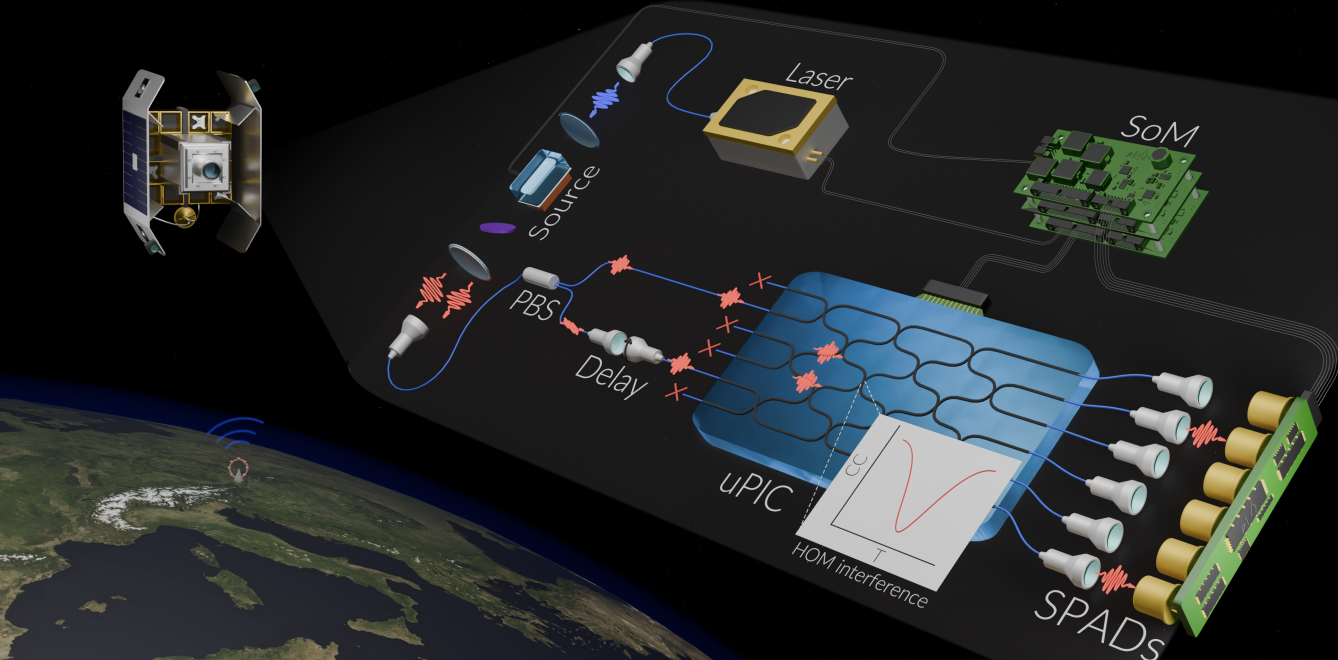
French photonic quantum vendor Quandela, together with the Center for Nanoscience and Nanotechnology (C2N) and other institutions, has successfully taped out and batch-processed thousands of spin-photon interface devices on a semiconductor pilot line, conducting large-scale automated statistical benchmarks covering optical emission quality, solid-state spin coherence performance, and inter-device uniformity [4][18].

In terms of technical implications, this milestone breaks the legacy academic screening paradigm that relied on manual fine-tuning of a handful of selected solid-state quantum microcavities, bringing core interface components of hybrid photonic quantum systems to wafer-scale fabrication on the order of thousands of devices for the first time. Compared to pure measurement-based optical architectures (such as PsiQuantum's Omega dual-rail encoding achieving 99.98% SPAM fidelity), Quandela's hybrid route combining deterministic single-photon sources and spin memory compensates for the lack of deterministic interactions in passive photons. However, this batch of devices has not yet disclosed system-level end-to-end single-photon loss budget tables or closed-loop SNSPD (superconducting nanowire single-photon detector) detection efficiency metrics, leaving a process gap before reaching the ultra-low photon loss thresholds demanded by fault-tolerant photonic quantum computing.

Regarding landscape impact, this breakthrough accelerates the evolution of optical QPUs (quantum processing units) from discrete laboratory systems to modular chips, directly encouraging European and Asia-Pacific semiconductor foundries to adopt photonic quantum processes. Within 2 to 3 years, such uniform interface devices are expected to become standardized building blocks for quantum network repeaters and the scaled assembly of hybrid optical processors.

Photonic Quantum Infrastructure: Xanadu Partners with Bluefors to Develop Utility-Scale Dedicated Cryogenic Systems

Canadian photonic quantum company Xanadu and ultra-low temperature equipment manufacturer Bluefors have announced a strategic partnership to co-develop a novel high-performance cryogenic prototype system tailored for utility-scale photonic quantum computers [35].

In terms of commercial and technical implications, while photonic quantum computing can transmit optical signals at room temperature, its high-sensitivity SNSPD arrays and ultra-fast integrated optoelectronic switching circuits must operate in millikelvin cryogenic environments. This collaboration marks the first time a full-stack photonic quantum computer manufacturer has partnered directly with a tier-one cryogenic vendor to co-design end-to-end solutions for massive optical fiber feedthrough interfaces and ultra-low thermal dissipation tailored specifically for photonic quantum modules.

Regarding landscape impact, Bluefors' dedicated production line for photonic quantum platforms will trigger direct differentiation between photonic and superconducting quantum systems in internal cryostat cabling standards, and is expected to establish industry standards for high-density cryogenic packaging of superconducting detector arrays within 3 years.

Neutral Atoms: Infleqtion Teams Up with Riverlane to Develop Real-Time Quantum Error Correction

Neutral-atom quantum computing developer Infleqtion and UK quantum error correction firm Riverlane have signed a Memorandum of Understanding (MoU) to integrate Riverlane's real-time QEC (quantum error correction) technology into Infleqtion's full-stack neutral-atom hardware and software, aiming to accelerate the implementation of highly reliable logical qubits [1][40].

In terms of technical implications, the neutral-atom approach currently holds a public lead in logical qubit counts (e.g., QuEra's demonstration of 96 logical qubits), but its cycle repetition rate typically sits at just 1 to 10 Hz, constrained by atom cooling, loading, and mid-circuit measurement latencies. Integrating Riverlane's real-time decoder aims to compress the processing latency of classical syndrome measurement data to sub-microsecond levels, aligning decoding speeds with the neutral-atom coherence window and preventing decoherence caused by data backlogs.

Regarding landscape impact, this partnership signals that third-party independent error correction software stacks are deeply penetrating top-tier neutral-atom hardware architectures, disrupting the historical paradigm where hardware vendors developed QEC algorithms behind closed doors. Over the next 18 months, neutral-atom platforms leveraging this integration are expected to launch commercial logical qubit prototypes equipped with continuous real-time error correction feedback.

Solid-State Quantum Devices: Record Lifetime Achieved for Single-Photon Solid-State Quantum Memory

A research team led by Prof. Hugues de Riedmatten at the Institute of Photonic Sciences (ICFO) in Spain has developed a novel solid-state quantum memory that achieves long-lived storage of single-photon quantum states, setting a new public record for single-photon storage duration in a solid-state platform [16].

In terms of technical implications, this research overcomes the physical limit where single-photon fidelity rapidly degrades with storage time in solid-state rare-earth-doped crystals. By extending the coherence window for storing quantum-entangled photons in solid-state media, it provides critical hardware node support for constructing long-distance quantum repeaters.

Regarding landscape impact, this performance breakthrough directly empowers the deployment of long-haul quantum networks, making intercity quantum secure communication feasible without relying on trusted relays, and is projected to enter field testing on long-haul fiber backbones within 3 to 5 years.

Atomic Manufacturing: University of Manchester Advances 20 nm Single-Atom Placement with £12.6 Million Project

The UK has launched a national research program with a total budget of £12.6 million, leveraging advanced instrumentation at the University of Manchester to implant single atoms into substrate materials with a precision of 20 nanometers [13].

In terms of technical implications, 20 nm precision single-atom implantation marks a shift in solid-state single-atom quantum device manufacturing from stochastic doping toward deterministic engineering. Compared to public SOTA benchmarks for silicon-based atomic-precision donor qubits (such as Australia's SQC achieving sub-nanometer positioning with 99.99% two-qubit gate fidelity using scanning probe techniques), the 20 nm implantation method lags behind STM lithography in absolute lattice precision, but its manufacturing throughput and large-scale array scaling potential are significantly superior to probe-based methods.

Regarding landscape impact, this project will directly benefit solid-state spin qubits and high-sensitivity single-atom sensors, and is slated to provide pilot-scale atomic manufacturing tool support for UK and European semiconductor quantum device manufacturers within 3 years.

03Algorithms

Algorithms & Software

Post-Quantum Transactions: Bitcoin Quantum Protection Compute Costs Slashed by Nearly 80% in a Single Week

In a post-quantum Bitcoin optimization challenge, a cryptographic optimization scheme jointly developed by Yukon and StarkWare achieved a major breakthrough: the computational cost required for a single post-quantum Bitcoin transaction dropped from an initial estimate of approximately $320 (requiring around 3,100 GPU hours) to roughly $67, representing a 79.1% reduction in compute time and overall hardware overhead within a single week [19].

In terms of technical implications, this work demonstrates for the first time that STARK-based post-quantum signature aggregation schemes can cross the engineering threshold of computational overhead, compressing verification costs that were previously commercially unviable down to a compute budget manageable by standard commercial cloud single-GPU instances in a short timeframe.

Regarding landscape impact, this directly alters engineering expectations regarding the Bitcoin network's feasibility in confronting quantum computing threats. If this cost can be further reduced to below $10 over the next 12 months, it will directly prompt the Bitcoin core developer community to initiate formal Bitcoin Improvement Proposals (BIPs) toward a soft-fork migration to post-quantum signature algorithms.

Circuit Optimization: POVMs Reduce Operational Overhead to Polynomial Scale

Algorithm researchers have proposed a novel quantum circuit restructuring approach that introduces a repeat-until-success POVM (Positive Operator-Valued Measure) on-the-fly verification mechanism. Using only 1 ancilla qubit and n working qubits (n+1 qubits in total), the scheme achieves a polynomial reduction in both the qubit count and unitary operations required by quantum algorithms [14].

In terms of technical implications, conventional fault-tolerant quantum computing architectures largely rely on deferred verification or extensive redundant ancilla qubit allocations, which rapidly consume compute resources during the NISQ (Noisy Intermediate-Scale Quantum) era. This approach is the first to achieve dynamic measurement and reset of intermediate computational states under minimal ancilla constraints, breaking the exponential circuit depth expansion bottleneck in multi-qubit algorithms.

Regarding landscape impact, the affected parties span all algorithm developers requiring deep circuits, including those working on chemical simulations and combinatorial optimization. This method allows current tens-to-hundreds-qubit hardware to run molecular calculation workloads that previously required hundreds of qubits, and is expected to be integrated into open-source quantum compiler optimization pipelines within a year.

Molecular Simulation: End-to-End Runtime Benchmark Framework Established for 10,000-Qubit Molecular Simulations

Researchers have established a compilation benchmark framework for full quantum molecular simulations at the 10,000 physical qubit scale, providing precise theoretical estimates of end-to-end runtimes across different hardware architectures for the first time: execution takes approximately 100 milliseconds (order of 10² ms) on photonic or superconducting platforms, compared to roughly 100 seconds (order of 10⁵ ms) on neutral-atom platforms due to atom shuttling and gate operation latencies [22].

In terms of technical implications, this framework moves beyond the traditional paradigm of assessing algorithm complexity purely through abstract gate counts. By unifying gate latencies, logical encoding ratios, and circuit recompilation overheads across physical platforms into an end-to-end runtime model, it establishes a rigorous engineering resource estimation benchmark for molecular ground-state solving in pharmaceutical and advanced materials sectors.

Regarding landscape impact, this work provides quantum strategy teams at biopharma and chemical conglomerates with an objective roadmap for hardware selection. It clearly highlights the throughput advantages of superconducting and photonic platforms in high-speed chemical dynamic simulations, and is expected to directly shape the procurement flow of enterprise quantum software and hardware budgets over the next 3 years.

Software Ecosystem: EU Launches €5 Million Project for Hardware-Agnostic Quantum Software Stack

Under the Horizon Europe initiative, the EU has officially launched the Q-VERSE multinational R&D consortium with a total budget of €5 million. Led by the Fraunhofer Institute for Open Communication Systems (FOKUS) alongside 13 academic and industrial partners, the consortium will build an open-source quantum software development stack completely decoupled from underlying hardware architectures, leveraging the Eclipse Qrisp open-source framework [8].

In terms of technical implications, current quantum software depends heavily on proprietary low-level compilers from individual hardware vendors, tightly coupling high-level algorithms to underlying QPUs. Q-VERSE aims to establish a unified, cross-platform high-level algorithm compilation standard across Europe through standardized Intermediate Representations (IR), allowing developers to seamlessly port code to superconducting, trapped-ion, or neutral-atom backends without modifying application-level logic.

Regarding landscape impact, this project directly counters the ecosystem lock-in of quantum development interfaces by North American tech giants, benefiting European quantum software startups and academic institutions. The stack is scheduled to complete core architectural deployment within 2 years, and is projected to reduce the entry barrier for European enterprises testing quantum workloads by over 50%.

Protein Folding: Lattice Protein Folding Solved on Annealing System Using Variational Algorithms

A joint research team from Chalmers University of Technology and Lund University in Sweden has successfully solved a lattice protein folding model on a D-Wave quantum annealing system using variational quantum optimization algorithms [26].

In terms of technical implications, the researchers designed a Hamiltonian encoding scheme that maps complex three-dimensional conformational searches of biomacromolecules onto a quantum spin glass model, validating the convergence characteristics of quantum annealing architectures when tackling highly constrained, multi-minima biological optimization problems.

Regarding landscape impact, this work expands the application envelope of quantum annealers in biological computing. However, for industrial-scale protein prediction involving larger residue counts, the approach remains constrained by limited hardware connectivity and sparse physical qubit coupling, keeping it positioned primarily as a complementary verification tool alongside classical supercomputers in the short term.

Physical Modeling: Neural Operator Model Accelerates Laser Welding Simulation 100,000-Fold

The Swiss Federal Laboratories for Materials Science and Technology (Empa) and Terra Quantum have jointly developed a physical simulation model called LP-FNO. Based on Fourier Neural Operators, it predicts full 3D melt pool dynamics in laser welding with speedups of up to 100,000 times compared to conventional multiphysics simulations [42].

In terms of technical implications, this model bypasses the massive compute bottlenecks that traditional finite element analysis encounters during nanosecond-scale transient mesh computations. By using frequency-domain operator mapping, it rapidly captures fluid dynamics and thermal conduction coupling boundaries in the melt pool, and features compatible algorithm interfaces for future porting to quantum-enhanced algorithms.

Regarding landscape impact, this achievement directly pushes precision laser processing and aerospace component manufacturing into an era of millisecond-level digital twin real-time closed-loop control, with integration into laser processing control boards for high-end industrial machinery expected within 2 years.

04Industry

Industry & Ecosystem

M&A: Quantum eMotion to Acquire Plurilock in CAD 33.8 Million Deal

Canadian publicly traded quantum technology company Quantum eMotion has announced a definitive agreement to acquire 100% of cybersecurity service provider Plurilock Security Inc. for an aggregate consideration of CAD 33.8 million (approximately USD 23.8 million), with the transaction expected to close before the end of 2026 [10].

In terms of commercial and technical implications, each share of Plurilock will be exchanged for CAD 0.084 in cash and 0.0763 shares of Quantum eMotion stock. This acquisition sets a precedent for a pure-play quantum hardware security company acquiring an established IT endpoint security provider, directly injecting Quantum eMotion's patented quantum random number generator (QRNG) hardware IP into Plurilock's behavioral adaptive authentication and identity management software, which already serves dozens of government and enterprise clients.

Regarding landscape impact, affected stakeholders include North American traditional cybersecurity and Zero Trust architecture vendors. The merged entity plans to launch a next-generation endpoint protection platform with hardware-level post-quantum credentials within 1 year, accelerating the commercialization of post-quantum security products from lab hardware concepts into enterprise subscription-based cash flows.

Capital Movements: CDT Equity Discloses 22.7% Stake in Sarborg

CDT Equity has disclosed that it holds 1,290 shares in quantum technology firm Sarborg Limited, representing 22.7% of its total issued share capital. Sarborg's latest financing round priced shares at $125,000 each, implying a fully diluted post-money company valuation of approximately $709 million (roughly RMB 5.04 billion) [21].

In terms of commercial implications, against a backdrop of increasing capital market caution toward deep-tech investments, Sarborg's single-round valuation of $709 million places it firmly in the top tier of global private quantum hardware unicorns. This demonstrates that full-stack hardware teams possessing proprietary physical qubit fabrication and comprehensive measurement and control capabilities can still command substantial valuation premiums in primary markets.

Regarding landscape impact, this pricing sets a benchmark anchor for subsequent financing rounds across the global full-stack quantum hardware sector, directly bolstering private equity fundraising confidence for system developers and accelerating timelines for leading hardware companies eyeing public capital markets in the 2027–2028 window.

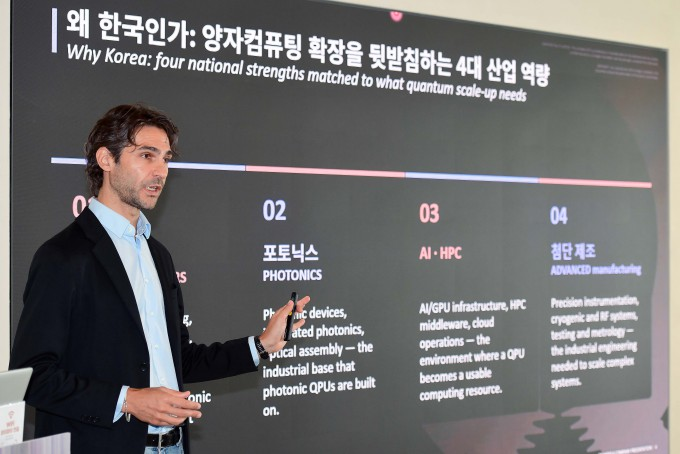
Regional Manufacturing: Quandela Establishes Asian Manufacturing and R&D Hub in South Korea

Building on its ongoing Asia-Pacific expansion, French photonic quantum computing company Quandela has officially designated South Korea as its Asian hub for QPU manufacturing and hardware R&D ecosystems. It plans to pursue foundry partnerships with South Korean semiconductor fabs and optoelectronic integrators, while collaborating with the Korea Advanced Institute of Science and Technology (KAIST) to develop electronic control units [7].

In terms of commercial and technical implications, the clear incremental significance of this development is that Quandela is no longer confined to commercial sales branch operations; instead, it is establishing the volume production of core photonic quantum control chips, photonic integrated circuit (PIC) packaging, and cryogenic hybrid optoelectronic testing lines directly within South Korea's semiconductor manufacturing supply chain.

Regarding landscape impact, this move breaks the capacity ceiling that European photonic quantum firms faced by relying solely on domestic pilot lines. Leveraging South Korean wafer foundries and high-density optoelectronic packaging capacity, Quandela expects to shorten volume tape-out delivery cycles for photonic quantum computing chips by over 40% within the next 2 years.

Infrastructure: Cloudflare Announces Launch of Quantum-Resistant Public CA Service

Global cloud connectivity and edge security provider Cloudflare (NYSE: NET) has officially announced its plans to become a global public Certificate Authority (CA), issuing next-generation digital security certificates that support both traditional public-key cryptography and native integration of PQC (post-quantum cryptography) standards to websites worldwide [36].

In terms of technical implications, as an edge infrastructure provider handling nearly 20% of global internet traffic, Cloudflare's entry into the public CA arena means quantum-safe certificates will transform from internal testbeds at select financial institutions into a standard, one-click internet security protocol available to any general website and end user.

Regarding landscape impact, affected entities include commercial digital certificate authorities such as DigiCert and Sectigo. Leveraging Cloudflare's globally distributed edge network, global distribution and OCSP (Online Certificate Status Protocol) verification latencies for post-quantum security certificates will be virtually eliminated, driving a multi-fold increase in web-wide PQC-compatible site penetration over the next 2 years.

Asset Security: Project Eleven Acquires Riva Labs to Expand Post-Quantum Cryptographic Infrastructure

Project Eleven, a startup dedicated to post-quantum security infrastructure for digital assets, has completed the acquisition of Riva Labs, fully absorbing its core technology and intellectual property across post-quantum multi-party computation (MPC), post-quantum digital signatures, quantum-resistant crypto wallets, and Ethereum account abstraction [37].

In terms of commercial and technical implications, this acquisition integrates Riva Labs' expertise in post-quantum signature algorithms for Ethereum EIP standards and smart contract account abstraction into Project Eleven's underlying custody architecture, creating a post-quantum security shield spanning the entire lifecycle of blockchain digital assets.

Regarding landscape impact, this development directly impacts crypto exchanges, institutional custodians, and Web3 application developers, pushing digital asset infrastructure into a production-grade private key migration and hardware key management upgrade cycle following the official finalization of NIST PQC standards.

Sensor Manufacturing: QSENSATO Secures €1 Million Investment to Build Quantum Sensor Facility

Italian quantum sensing startup QSENSATO has announced €1 million in funding via a SAFE (Simple Agreement for Future Equity) instrument. Led by European quantum investment fund Quantonation with participation from Deep Ocean Capital and others, the capital will be fully dedicated to constructing an in-house atomic vapor cell manufacturing facility [12][44].

In terms of technical implications, integrated atomic vapor cells serve as core sensing elements for next-generation quantum sensors, including quantum magnetometers, atomic clocks, and quantum gravimeters. By establishing an in-house wafer-scale vapor cell packaging line, QSENSATO addresses key engineering hurdles in alkali metal filling and long-term hermeticity retention during the mass packaging of high-vacuum miniature vapor cells.

Regarding landscape impact, affected domains include GPS-denied navigation for autonomous vehicles, medical magnetoencephalography (MEG) instrumentation, and geomagnetic navigation vendors. Once operational, the new line is expected to lower unit procurement costs for miniature atomic vapor cells by an order of magnitude, accelerating the penetration of quantum sensors into portable consumer and industrial devices.

Industrial Incubation: Roadrunner Quantum Lab Opens in New Mexico, Welcoming First 11 Tenants

Backed by $450 million in dedicated quantum strategic funding from the State of New Mexico, the 35,000-square-foot Roadrunner Quantum Lab (RQL), located in the Albuquerque Innovation District, has officially opened, welcoming its inaugural cohort of 11 quantum startup tenants [34].

Regarding landscape impact, RQL's proximity to Sandia National Laboratories and Los Alamos National Laboratory establishes a direct commercialization pipeline for federally funded physics research, positioning the facility as a major deep-tech cluster in the American Southwest to rival the Colorado Quantum Corridor. It is projected to incubate more than 30 multi-platform quantum deep-tech entities over the next 3 years.

Industry Awards: Quantum Effects Award 2026 Announces Four Hardware and Software Winners

Messe Stuttgart has officially announced the winners of the Quantum Effects Award 2026: a joint team from France's C12 and Thales won the Quantum Computing Hardware Award; Germany's Fraunhofer FOKUS received the Quantum Computing Software Award; Italy's QSENSATO secured the Quantum Sensing Award; and Germany's PicoQuant captured the Quantum Communication Award [9].

In terms of commercial implications, the award enforces strict evaluation criteria requiring submitted technologies to reach TRL (Technology Readiness Level) 5 or higher. By spotlighting mature technologies that have graduated from laboratories and proven viable under real-world industrial operating conditions, the awards reflect the European quantum industry's accelerating transition from scientific exploration to industrial deployment.

International Developments: Joint Survey by Six Industry Associations Reveals 90% of Quantum Firms Rely on Cross-Border Supply Chains

A new industry survey jointly released by six global quantum industry consortia reveals that as many as 90% of quantum tech enterprises worldwide rely on at least one overseas supplier for critical components, spanning key categories such as ultra-narrow linewidth lasers, dilution refrigerator subsystems, and high-purity enriched isotope materials [44].

Regarding landscape impact, these findings corroborate recent calls by Quantum Economic Development Consortium (QED-C) leadership urging North American and European stakeholders to strengthen transatlantic industrial coordination to mitigate supply chain disruption risks [39]. For global quantum investors, this underscores that unilateral trade barriers can readily stall global supply chains, driving valuation re-ratings for supply-chain vendors capable of providing domestic secondary-source alternatives.
05Other

Academic Frontiers

Many-Body Phase Transitions: Identifying Quantum Phase Transition Points Without Prior Order Parameters

The international physics journal Quantum has published a paper titled "Order parameter discovery for quantum many-body systems," in which researchers introduce a novel method to automatically identify critical points of quantum phase transitions without requiring prior knowledge of physical order parameters [11].

In terms of technical implications, traditional condensed matter physics relies heavily on theoretical physicists manually formulating order parameters when exploring topological phases of matter and strongly correlated electron systems. This study uses unsupervised feature extraction tools to extract phase boundary transitions directly from high-order correlation data of many-body wavefunctions, resolving the theoretical bottleneck of accurately locating boundaries in complex, uncharted states of matter.

Regarding landscape impact, this algorithm empowers research teams using neutral-atom or superconducting quantum simulators to investigate novel high-temperature superconductivity mechanisms and topological quantum error correction codes, compressing numerical simulation and experimental data analysis workflows from months to days.

Topological Photonics: ARL and University of Maryland Implement Damage-Resistant Optical Routing in Optical Fibers

Researchers from the U.S. Army Research Laboratory and the University of Maryland have detailed a topological photonics milestone, demonstrating a novel quantum optical routing technique featuring topological protection within standard optical fiber networks [15].

In terms of technical implications, the technique leverages topological invariants of optical band structures to render photons traversing the fiber core immune to backscattering losses caused by microscopic internal defects, bends, and temperature fluctuations, achieving long-distance, low-loss unidirectional guided-mode transmission of single-photon quantum states across telecommunication-band fibers.

Regarding landscape impact, affected sectors include communication systems operating in hostile environments and intercity quantum teleportation backbone networks. This topological protection mechanism provides physical-layer assurance for future survivable quantum communication nodes, with field-deployable mobile fiber-link trials planned within 3 to 4 years.

Laser Metrology: Single-Shot Rotating Spot Imaging Unlocks Ultra-High-Precision Laser Frequency Measurement

An international collaborative team of physicists has developed an innovative method for precision laser wavelength metrology. By capturing a single optical frame showing spatial rotation that shifts with laser frequency offsets, absolute laser frequency changes can be resolved accurately within millisecond-scale exposures [3].

In terms of technical implications, traditional ultra-precise laser wavemeters rely on complex mechanically scanned Fabry-Pérot interferometers or bulky femtosecond optical frequency combs. This technique converts frequency drifts directly into spatial image rotation angles using micro- and nanophotonic elements, achieving unprecedented relative frequency resolution in a single, motion-free image acquisition.

Regarding landscape impact, this breakthrough directly benefits cold-atom, trapped-ion, and diamond color-center quantum hardware laboratories that depend on narrow-linewidth laser frequency stabilization. By reducing the physical footprint and manufacturing cost of laser locking apparatuses by more than 70%, it significantly accelerates the engineering of vehicle-mounted portable atomic clocks and field-deployable quantum gravimeters.

Photonic Machine Learning: Optical Reservoir Computing Substantially Reduces Training Data Requirements

A research team has explored using integrated photonic quantum processors to construct quantum optical reservoir computing architectures. By leveraging quantum superposition and interference to map input feature spaces into high-dimensional nonlinear spaces, the team demonstrated that the architecture achieves a multi-fold gain in data utilization efficiency when performing complex feature classification and pattern recognition tasks with limited labeled training samples [5].

In terms of technical implications, classical reservoir computing is bottlenecked by the nonlinear saturation of traditional physical media, whereas photonic quantum systems exploit the bosonic statistics of photons to yield an exponentially expanding Hilbert state space, overcoming the challenge of training accurate predictive models on small sample sizes.

Regarding landscape impact, this work charts a new course for low-power edge computing and application-specific scientific data analysis processors, with initial commercial adoption anticipated within 2 to 3 years across data-sparse domains such as real-time radar signal demodulation and faint medical imaging feature extraction.

Talent Hub: Five Top UCSB Professors Join NSF Quantum Leap Challenge Institutes

The University of California, Santa Barbara (UCSB) has announced that five of its faculty members—including superconducting physics expert Michel Devoret, photonics expert Dan Blumenthal, along with Andrew Jayich, Ania Jayich, and David Weld—have joined three National Science Foundation (NSF) Quantum Leap Challenge Institutes (QLCI) [43].

Prof. Devoret, a pioneer of the superconducting transmon qubit and topological quantum circuit protection, brings a leading research team into these large-scale multidisciplinary initiatives. This reflects how North American quantum hardware research is breaking down institutional silos to mount concerted efforts across fault-tolerant qubit design, quantum metrology, and integrated photonic interconnects, accelerating progress in mitigating superconducting multi-qubit microwave packaging losses and extending quantum coherence limits over the next 3 years.

06Impact

Today's Impact

  1. Cryptocurrency & Web3 Institutional Infrastructure: Bitcoin miners, crypto asset custodians, and public blockchain core developer communities are directly impacted [19][37]. Post-quantum signature verification has broken out of its highly inefficient regime—plummeting from an initial $320 and thousands of GPU hours per transaction down to a $67 computational cost—marking a watershed transition from theoretical possibility to commercial viability. Watch closely for the Ethereum community's migration timeline regarding post-quantum account abstraction and multi-party computation (MPC) standards, as well as whether the Bitcoin core development tier accelerates corresponding BIP soft-fork proposals.
  2. Photonic Quantum Chip Supply Chain & Advanced Semiconductor Manufacturing: Photonic quantum system developers, wafer foundries, and cryogenic refrigeration equipment suppliers are directly impacted [4][7][18][35]. With Quandela batch-fabricating thousands of spin-photon interface devices on pilot lines and extending its manufacturing footprint into the South Korean foundry ecosystem, complemented by Xanadu and Bluefors' custom cryogenic infrastructure for photonic detectors, the photonic quantum sector is definitively leaving behind artisanal, one-off laboratory setups. Watch closely for multi-chip indistinguishability metrics among batch-fabricated devices (current SOTA stands at 99.50%) and empirically measured end-to-end optical link loss budgets.
  3. Telecom Operators & Global Internet Cybersecurity Infrastructure: Multinational telecom carriers, public certificate authorities (CAs), and traditional cloud security providers are directly impacted [25][36]. CTM and Huawei have launched the first commercial IP network integrating QKD in the Greater Bay Area, while Cloudflare has entered the public CA market to issue quantum-safe digital certificates natively. Quantum security is thus transitioning from isolated private networks into public web and telecom core infrastructures. Watch closely for native handshake support for post-quantum certificates across major global browsers, alongside the total cost per bit of key distribution across metropolitan quantum-secured IP networks.
  4. Quantum Industry Capital Landscape & Corporate Strategic Positioning: Full-stack quantum computing startups, cybersecurity M&A funds, and sovereign technology funds are directly impacted [10][20][21][44]. Sarborg has secured a $700M+ valuation in primary markets, and Canada has seen a CAD 33.8 million deep-tech acquisition of an established security software provider; yet 90% of global quantum enterprises remain heavily exposed to cross-border component supply chains. Watch closely for potential tightening of Western export controls on peripheral components like cryogenic valves and ultra-narrow linewidth lasers, as well as the progress of domestic hardware vendors in qualifying indigenous second-source replacements.
07Other

Editorial Commentary

Reviewing today's developments across the quantum landscape, a definitive inflection point is coming into focus: the quantum industry's narrative is shifting away from isolated physical qubit headcounts toward a dual convergence of bottom-up volume manufacturing and top-down commercial economic viability. At the foundational hardware layer, whether through pilot semiconductor lines producing thousands of spin-photon interfaces or dedicated cryogenic platforms built specifically for photonic detectors, the sector has decisively moved past the artisanal era of manual laboratory tuning to leverage mature semiconductor foundries and standardized cryogenic supply chains. This signals that device uniformity and system integration—the prerequisites for universal fault-tolerant computing—have become the ultimate benchmarks by which investors and industry leaders judge the viability of competing hardware architectures.

Across the application ecosystem, crossing economic thresholds is quietly recalibrating the deployment of post-quantum defenses. The adoption of post-quantum cryptography in digital assets and the general web was long hindered by high computational complexity and lengthy signature latencies. Yet the dramatic multi-fold compression of compute costs over very short intervals, combined with native PQC support from global edge network leaders, is rapidly dismantling the cost barriers to migration. The quantum sector is no longer an abstract future promise; as telecom core networks and foundational internet handshakes begin embedding quantum-safe DNA, the real battles over supply chain autonomy and commercial M&A consolidation are now fully underway.