Regional Strategy and Sovereign Procurement
Taiwan's National Science and Technology Council is accelerating the drafting of a Request for Proposals (RFP) for a national hybrid quantum computer, planning to deploy a full-stack system featuring at least 150 physical qubits at the Tainan Supercomputing Center with a budgeted allocation of NT$3.76 billion (approx. US$116.6 million). The RFP requires delivery within 5 years, mandatory interfacing with the NANO4 and NANO5 classical supercomputers, and restricts prime contractor eligibility to domestic enterprises[28].
Commercial Significance: This represents one of the highest-value sovereign-grade quantum computing full-stack integration procurements in the Asia-Pacific to date. The business model adopts a win-win consortium framework of "domestic prime contractor + overseas core hardware partners," covering the entire lifecycle of dilution refrigerators, room-temperature microwave control cabinets, superconducting/trapped-ion processors, and facility vibration-isolation engineering[28].
Landscape Impact: It compels global full-stack giants such as IBM, IQM, and Quantinuum to form joint ventures or licensing consortia with major Taiwanese system integrators and semiconductor foundries, while driving substantial commercial order growth across local high-frequency coaxial cabling, cryogenic packaging, and microwave component supply chains over the next three years[28].
Post-Quantum Chips and Cryptographic Engineering
Nasdaq-listed SEALSQ and its parent company WISeKey signed a Memorandum of Understanding (MoU) with the Government of the Canton of Jura, Switzerland, planning to jointly invest CHF 40 million to 60 million (approx. US$48.7 million to 73 million) over the next 6 years to establish a Post-Quantum Semiconductor and Cybersecurity Center in Jura. Leveraging SEALSQ's QS7001 post-quantum secure chip, the center will deploy the NIST-standardized ML-KEM and ML-DSA post-quantum cryptographic algorithms, projected to create over 250 direct jobs by year 8[8].
Commercial Significance: Marks the transition of Post-Quantum Cryptography (PQC) from software patch updates into the phase of large-scale physical hardening and personalized burning in hardware secure elements, leveraging Switzerland's precision micromechanical manufacturing foundation to build a sovereign European hardware supply chain[8].
Landscape Impact: European defense, critical infrastructure, and aerospace clients gain a European-sovereign delivery source for quantum-resistant chips, exerting direct competitive pressure on incumbent market shares held by STMicroelectronics and NXP in secure chips[8].
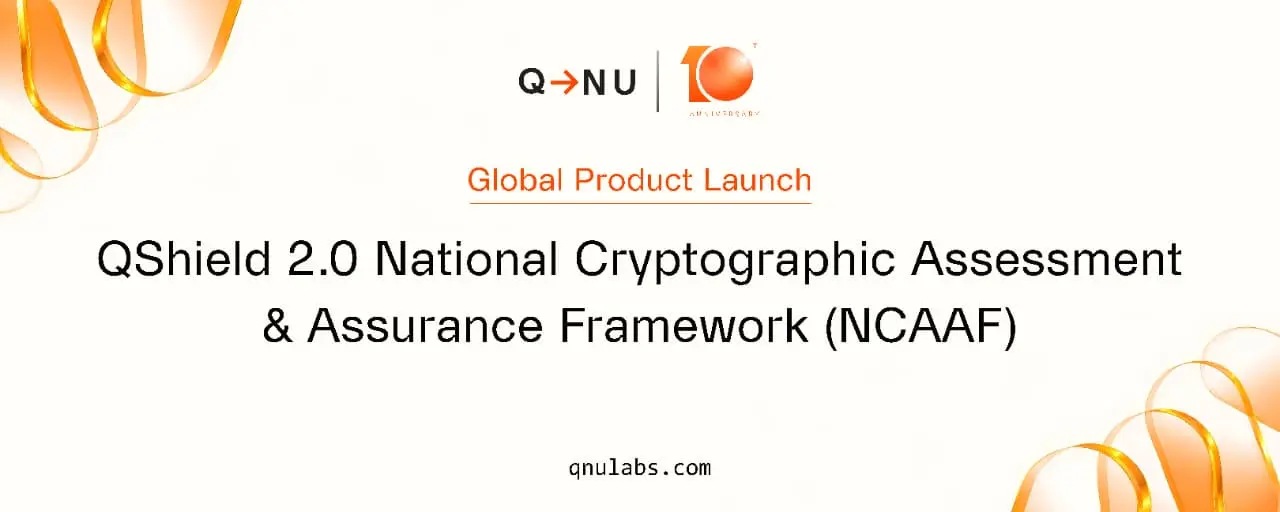
Indian quantum security vendor QNu Labs marked its 10th anniversary by launching its proprietary QShield 2.0 full-stack post-quantum cryptography and cryptographic agility platform. The platform is designed to support the National Cyber Assessment and Assurance Framework (NCAAF) and assist critical infrastructure across finance, energy, and defense in complying with statutory requirements set by India's National Quantum Mission (NQM) to initiate comprehensive PQC migration by 2027[7].
Commercial Significance: Adopting a crypto-agile architecture, the platform enables protected organizations to monitor algorithm vulnerabilities in real time and seamlessly hot-swap to post-quantum suites without refactoring underlying business software, lowering enterprise compliance overhaul costs during algorithmic transitions[7].
Landscape Impact: Locks in multi-billion-dollar security upgrade budgets across government and enterprise sectors on the South Asian subcontinent, accelerating efforts by India's domestic IT systems to break path dependency on Western legacy RSA encryption[7].
Defense Software and Transnational Expansion
British quantum algorithm startup Phasecraft, supported by funding from the Virginia Economic Development Partnership (VEDP) and Virginia Jobs Investment Program (VJIP), officially established its U.S. headquarters in Arlington, focusing on executing quantum software collaborations with DARPA, ARPA-E, and federal energy and defense agencies[11].
Landscape Impact: Reflects an industry trend where leading European quantum software enterprises accelerate cross-border migration to the Greater Washington defense-industrial corridor to capture non-dilutive government defense research procurement funding[11].
Industry Giants and Financial Ecosystem
Intel CEO Lip-Bu Tan publicly stated at an industry conference that quantum computers will not replace existing Central Processing Units (CPUs) and Graphics Processing Units (GPUs), but will instead coexist and operate complementarily as heterogeneous computing accelerators in specific industrial fields, with the industry's current focus resting on discovering application scenarios with genuine commercial utility[24].
Landscape Impact: Solidifies the strategic posture among traditional semiconductor leaders positioning quantum hardware as specialized coprocessors for supercomputing data centers, dampening irrational hype around quantum machines disrupting general-purpose classical servers in the near term[24].
Publicly listed quantum computing company D-Wave (NYSE: QBTS) announced the appointment of Bernard Gavgani, former Group CIO of BNP Paribas, to its Board of Directors and Cybersecurity Committee[25].
Commercial Significance: By tapping into the industry credibility and government-enterprise network of a top European investment bank IT leader, D-Wave aims to accelerate enterprise paid conversions for its annealing and hybrid quantum solvers across asset allocation, derivatives risk management, and cross-border fraud detection in European and American banks[25].
Open Foundries and Regional Innovation
The CORNERSTONE open-access silicon photonics foundry platform at the University of Southampton, UK, announced that applications are open for its Cornerstone Photonics Innovation Centre (C-PIC) Future Leaders Programme, scheduled for January 12–14, 2027, specifically supporting pilot-line processes and startup incubation for quantum silicon photonics platforms[26].
Landscape Impact: Further lowers financial barriers to trial-and-error tape-outs for European universities and startups in silicon photonics, accelerating the transfer of quantum photonics laboratory breakthroughs to volume foundry lines[26].
Chulalongkorn University in Thailand, coordinated by Siam Quantum Square, signed an MoU with South Korea's Qunova Computing to jointly pursue industrial R&D on hybrid quantum-classical algorithms for chemicals, materials, fluid dynamics, and financial risk control[9]; concurrently, it signed a five-year strategic collaboration agreement with the Global Research Center for Quantum and Chemical Innovations (G-QuAT) at Japan's National Institute of Advanced Industrial Science and Technology (AIST) to co-develop quantum computing applications and cultivate specialized engineering talent in Southeast Asia[10].
Landscape Impact: Marks how Southeast Asian academia and industry are forging transnational consortia to deeply link with hardware and software innovation hubs in Japan and South Korea, accelerating the deployment of quantum-enabled demonstration projects in tropical agrochemical synthesis and regional financial settlement[9][10].