Sep 16, 2026 – Sep 17 · Daily Brief

$2 Billion Expansion of Pure-Play Quantum Chip Mass-Production Foundry

56 items · 13 sourcesPDFThis issue's roundup is free
02Hardware

Hardware Frontier

Superconducting Modality

Researchers developed an ultra-compact dilution refrigerator system that compresses the full cool-down cycle of a superconducting quantum chip from room temperature to operating temperature from the conventional 24+ hours down to 1.2 hours, achieving a 99% single-qubit gate fidelity at cryogenic temperatures [23]. Technical implications: At 99%, the single-qubit gate fidelity (F₁Q, logical gate precision on a single qubit) still lags by roughly an order of magnitude in error rate compared to the current publicly reported cloud-calibrated state-of-the-art (SOTA ≥99.95%), and two-qubit gate fidelity (F₂Q, with a production SOTA median of 99.5%–99.9%) and coherence time T₁ were not disclosed; its core value lies in reducing physical chip test turnaround cycles to 1/20 of previous durations, though it has yet to resolve the TLS (two-level system) fluctuation limitations caused by material defects in superconducting architectures [23]. Strategic impact: Directly benefits quantum chip fabrication teams and high-frequency iteration laboratories by boosting device screening throughput nearly tenfold, accelerating prototype screening cadence over the next 6 to 12 months [23].

A research team integrated a solid-state voltage standard into a Josephson photonic device, achieving a 14-decibel (14 dB) net enhancement in signal amplification while simultaneously providing phase-sensitive gain and microwave field squeezing within a single on-chip device [29]. Technical implications: Compared to conventional Josephson parametric amplifiers, the net 14 dB gain increase effectively suppresses added thermal noise and surmounts the threshold of high-speed microwave control and readout distortion driven by phase drift; benchmarking against current superconducting readout fidelity F_RO (98%–99.5%), this technology delivers an amplification chain with lower distortion for ultra-weak microwave signals, though crosstalk suppression metrics for multi-channel array parallel readout remain to be characterized [29]. Strategic impact: Empowers superconducting and microwave photonic hardware developers by directly lowering systemic thermal loads and error rates across large-scale syndrome readout chains, with an engineering translation cycle of approximately 18 to 24 months [29].

Researchers proposed a robust control protocol that suppresses drive-field imperfections and non-target state leakage via engineered two-photon dissipation, achieving high-speed operations and fault-tolerant noise resilience concurrently in cat qubits (qubits encoded in coherent states of microwave resonators) [27]. Technical implications: Exploiting nonlinear dissipation dynamics decouples coherent control speeds from error thresholds in noise-biased hardware architectures, overcoming the traditional technical trade-off in hardware-level autonomous error-correction schemes where "accelerating drive speed inevitably exacerbates leakage errors"; compared to existing cat-qubit control protocols, this approach substantially suppresses bit-flip leakage introduced by microwave pulse drifts, though multimode cavity coupling and universal non-Clifford gate fidelities still require experimental verification [27]. Strategic impact: Provides a solid theoretical foundation for noise-biased superconducting hardware roadmaps, reducing the physical ancilla overhead required to construct fault-tolerant surface codes and benefiting hardware startups focused on bosonic encoding [27].

Solid-State and Spin Quantum Dot Modalities

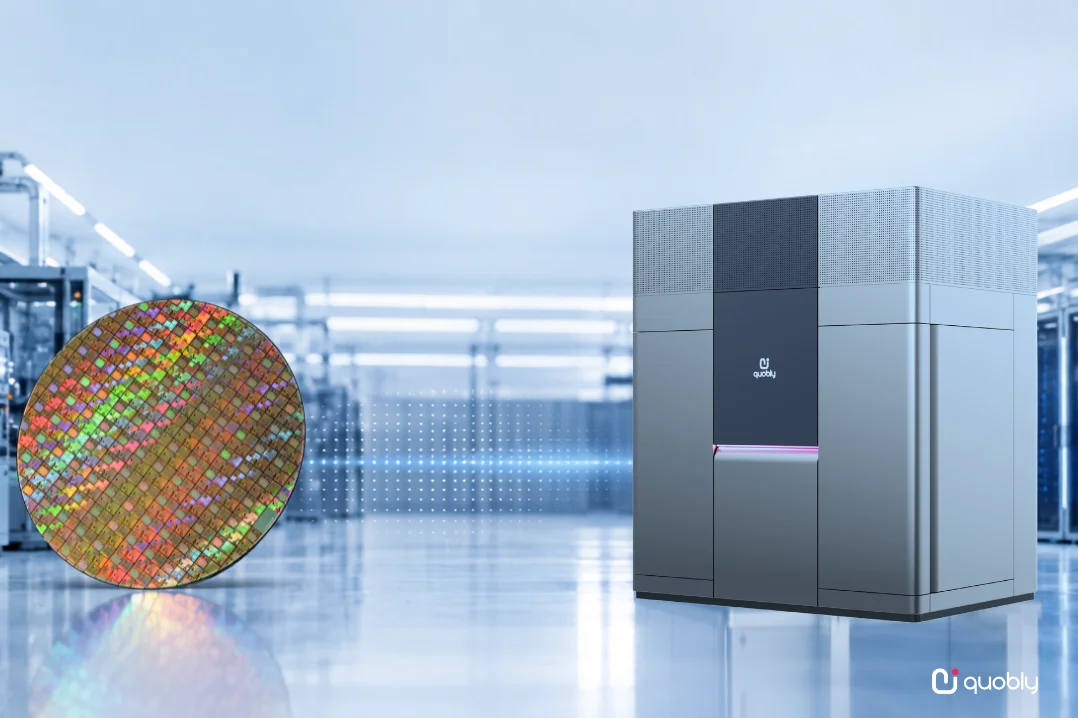
French startup Quobly successfully demonstrated single-chip integrated qubit readout circuitry, single-qubit gates, and two-qubit gate operations based on QSOI (quantum Silicon-on-Insulator) on STMicroelectronics' 300 mm industrial-grade silicon processing line [14]. Technical implications: This marks the first single-chip integration verification of readout and two-qubit logic control for the spin roadmap on an industry-standard 300 mm foundry line; benchmarking against silicon spin SOTA metrics (SQC reported 99.99% on atomic-precision donor qubits; Diraq and imec sampled median F₂Q >99% on 300 mm production wafers), Quobly validated the full technology transfer and CMOS foundry compatibility pipeline, though whole-chip two-qubit gate fidelity distributions and N_ops (number of operations executable within coherence times, with spin benchmarks at only 10²–10³, the lowest range among the five major modalities) require further disclosure [14]. Strategic impact: Verifies the feasibility of scaling production via commercial foundries for fabless design startups, advancing the monolithic integration of silicon spin chips with conventional classical control circuitry, with cloud access to Alloy Pioneer test coupons expected to open in late 2026 [14].

Researchers elevated the operating clock frequency of hole spin qubits to 40 gigahertz (40 GHz) by applying epitaxial strain and enhanced coupling within germanium/silicon-germanium (Ge/SiGe) heterostructures—exceeding standard operating frequencies of existing peers by more than tenfold—and realized intrinsic shielding against ambient electrical noise in frequency bands above 25 GHz [18]. Technical implications: The 40 GHz clock frequency compresses spin-qubit logic gate times into the sub-nanosecond regime, delivering an order-of-magnitude acceleration compared to typical 10-to-100-nanosecond gate times in conventional silicon spin architectures; this breakthrough multiplies the effective number of operations N_ops achievable within coherence times, though localized heating and array crosstalk control driven by ultra-high-frequency microwave excitation remain limiting factors for scaling beyond 10 qubits [18]. Strategic impact: Reverses the industry consensus that spin-qubit gate operations are inherently slow, providing strong technological pull for semiconductor ecosystem vendors developing cryogenic ultra-high-speed RF control chips [18].

Two research teams collaborated with a London-based hardware startup on experiments exploring the use of mesoscopic physical properties of nanoscale metallic gold to address qubit coherence lifetimes and manufacturing scalability [42]. Strategic impact: This exploration remains in early laboratory proof-of-concept stages with standard fidelity metrics undisclosed, requiring at least a 3-to-5-year R&D cycle before realizing standardized logical quantum gates, reflecting the academic community's ongoing search for novel solid-state physical substrates beyond superconducting and silicon-based systems [42].

Neutral-Atom Modality

The 5th Institute of Physics at the University of Stuttgart developed circular Rydberg atoms with electrons maintained in stable high-principal-quantum-number circular orbits, achieving a stable storage time of 11 milliseconds (11 ms) and setting three world records across energy-level lifetime, wave-function physical size, and storage duration [8]. Technical implications: In neutral-atom systems, the excitation lifetimes of conventional low-angular-momentum Rydberg states are typically only 1 to 10 microseconds, imposing a rigid coherence ceiling on two-qubit entangling operations; circular states extend high-excitation-state lifetimes by up to a thousandfold, giving excited states lifetime margins approaching ground states for the first time [8]. However, key thresholds remain before practical computation can be realized: two-qubit entangling gates matching Harvard’s 99.5% fidelity across 60 atoms in parallel have not yet been demonstrated, and the 1-to-10-hertz cycle repetition rate bottleneck characteristic of neutral-atom platforms remains unbroken during circular-state loading and preparation [8]. Strategic impact: Introduces a novel, long-lived encoding degree of freedom for neutral-atom quantum computing and high-precision simulation systems, providing leading neutral-atom enterprises such as QuEra and Pasqal with a new candidate physical mechanism to optimize higher-order Rydberg gate schemes [8].

Photonic and Microwave Frontiers

A research team at Saarland University utilized a diamond nitrogen-vacancy (NV) center maser to observe the transition from continuous-wave microwave emission to periodic pulsing under ambient room-temperature and atmospheric-pressure conditions without vacuum, successfully generating a microwave frequency comb spectrum [30]. Technical implications: Breaks the stringent hardware constraint requiring traditional quantum microwave amplifiers and masers to operate at millikelvin (mK) cryogenic temperatures and ultra-high vacuum, realizing a solid-state room-temperature microwave frequency comb output; although its non-classical state purity and phase noise at the single-photon microwave level remain inferior to cryogenic Josephson devices, it surmounts a pivotal hurdle toward system integration [30]. Strategic impact: Provides a new source roadmap for miniaturizing quantum radar, compact deep-space communications, and chip-scale quantum microwave sensing apparatuses, lowering hardware deployment costs by more than two orders of magnitude [30].

Nanofabrication engineering improved the single-photon collection efficiency of epitaxial semiconductor quantum dots to over 80%, breaking a long-standing efficiency plateau for such devices [31]. Technical implications: Benchmarked against fault-tolerant optical quantum computing thresholds (such as PsiQuantum requiring superconducting nanowire single-photon detector efficiencies ≥95% alongside an exceptionally tight end-to-end optical loss budget), an 80% collection efficiency represents significant progress for semiconductor solid-state single-photon sources; however, this metric does not account for on-chip waveguide coupling losses and filtering insertion losses, leaving a performance gap before meeting the requirements of overall lossless fusion gates [31]. Strategic impact: Directly benefits quantum key distribution (QKD) transmitters and metropolitan quantum entanglement distribution networks, advancing solid-state single-photon sources toward industrial procurement roadmaps [31].

03Algorithms

Algorithms and Software

An IBM research team combined a real-time error detection protocol with statistical error mitigation techniques on a superconducting quantum processor, reducing the quantum state sampling runs required for trustworthy computation to 1/63 of the original requirement (a 63x reduction in sampling demand) [44]. Technical implications: Overturns the industry's prior rigid division that treated "fully fault-tolerant hardware quantum error correction (QEC)" and "near-term statistical error mitigation" as mutually exclusive pathways; by setting low-overhead error-detecting codes at the circuit level to filter out explicit higher-order errors and then utilizing statistical post-processing to eliminate residual bias, the team slashed algorithm sampling computational overhead by 98.4% without incurring full logical-qubit surface code overheads, surmounting the barrier of explosive computational costs in practical algorithms [44]. Strategic impact: Directly extends the accessible computational depth of noisy intermediate-scale quantum (NISQ) hardware, bringing the viability of material simulation algorithms on hundred-qubit chips significantly closer, with integration into the core Qiskit runtime expected within the coming months [44].

Researchers introduced a streaming incremental error-correction scheme that permits error-correction processing to be pipelined before complete syndrome extraction cycles (measurement cycles locating physical errors) have fully concluded [26]. Technical implications: Breaks the traditional blocking paradigm that required waiting for a full measurement cycle to finish before triggering backend decoding; by performing continuous forward decoding on partially received syndromes, it alleviates the critical "decoding backlog" bottleneck in fault-tolerant quantum computing caused when real-time decoding latencies exceed physical coherence windows [26]. Simulations verified that this scheme suppresses time latencies at the expense of only minimal precision penalties, filling a crucial vulnerability in real-time closed-loop control [26]. Strategic impact: Offers an optimized architectural path for hardware engineering teams developing dedicated error-correction co-processors and FPGA decoding accelerators, benefiting ecosystem vendors specializing in low-latency control systems [26].

A University of Geneva research team proposed a qubit-recycling magic state distillation protocol that keeps the required count of logical ancilla qubits strictly constant when preparing high-fidelity diagonal logical states within the Clifford hierarchy, no longer scaling with the computational code distance [22]. Technical implications: In universal fault-tolerant quantum computing, the overhead of magic state preparation and distillation required to execute non-Clifford gates (such as T gates) routinely accounts for over 90% of total physical hardware resources; this achievement compresses the ancilla spatial complexity of magic state distillation from polynomial scaling down to a constant O(1), overcoming the ancilla hardware explosion threshold as logical scales expand [22]. Strategic impact: Restructures the physical hardware budget models of full fault tolerance, with the potential to reduce the estimated total physical qubit count needed for universal quantum advantage by 30% to 50%, setting a new architectural benchmark for long-term fault-tolerant planning [22].

Austrian quantum software developer ParityQC launched the Parity Twine compiler on the IBM Qiskit platform, which maps higher-order optimization problems directly onto native hardware topologies, completely eliminating the SWAP gate overhead traditionally required to match physical connectivity during quantum circuit compilation [16]. Technical implications and impact: Eliminates circuit depth expansion and fidelity decay caused by cumulative extra SWAP gates, enabling combinatorial optimization algorithms to execute with high accuracy on sparsely connected superconducting chips; the module is available as a 30-day free trial, accelerating the commercial QPU translation of industrial optimization algorithms from theory into practice [16].

Oak Ridge National Laboratory (ORNL), IonQ, NVIDIA, and the University of Tennessee jointly introduced DQAOA-GPT, a deep generative circuit synthesis architecture targeting Higher-Order Unconstrained Binary Optimization (HUBO) problems, which caps circuit parameter synthesis time at a constant 28 seconds while doubling optimal-solution hit quality [12]. Technical implications and impact: Ends the computationally grueling classical parameter optimization loop typical of variational quantum algorithms, leveraging deep forward inference to achieve efficient single-pass mapping; directly empowers the rapid deployment of trapped-ion and superconducting platforms in complex power-grid dispatching and transportation logistics optimization [12].

Nanyang Technological University in Singapore and the IBM Quantum Hub co-published a theoretical proof demonstrating that shallow quantum circuits deterministically outperform parameter-constrained classical autoregressive sequence prediction models in solution accuracy and sampling complexity on specific discrete mathematical correlation tasks [19]. Technical implications and impact: Delineates a computational complexity ceiling that classical probabilistic sequence algorithms cannot cross, providing a mathematical foundation for establishing genuine, credible quantum advantage in specific feature extraction and generative tasks [19].

Researchers discovered that peak-filtering quantum circuits, at circuit depths of 8 to 14 layers, yield probabilities of outputting targeted rare-event states 2 to 7 times higher than standard random disordered circuits [28]. Technical implications: Reveals underlying non-random algebraic organizational structures in deep coherent evolution systems, altering the traditional assumption that deep circuits inevitably degrade into complete disordered chaos and offering a new prior predictive tool for designing targeted state-search algorithms [28].

04Industry

Industry and Ecosystem

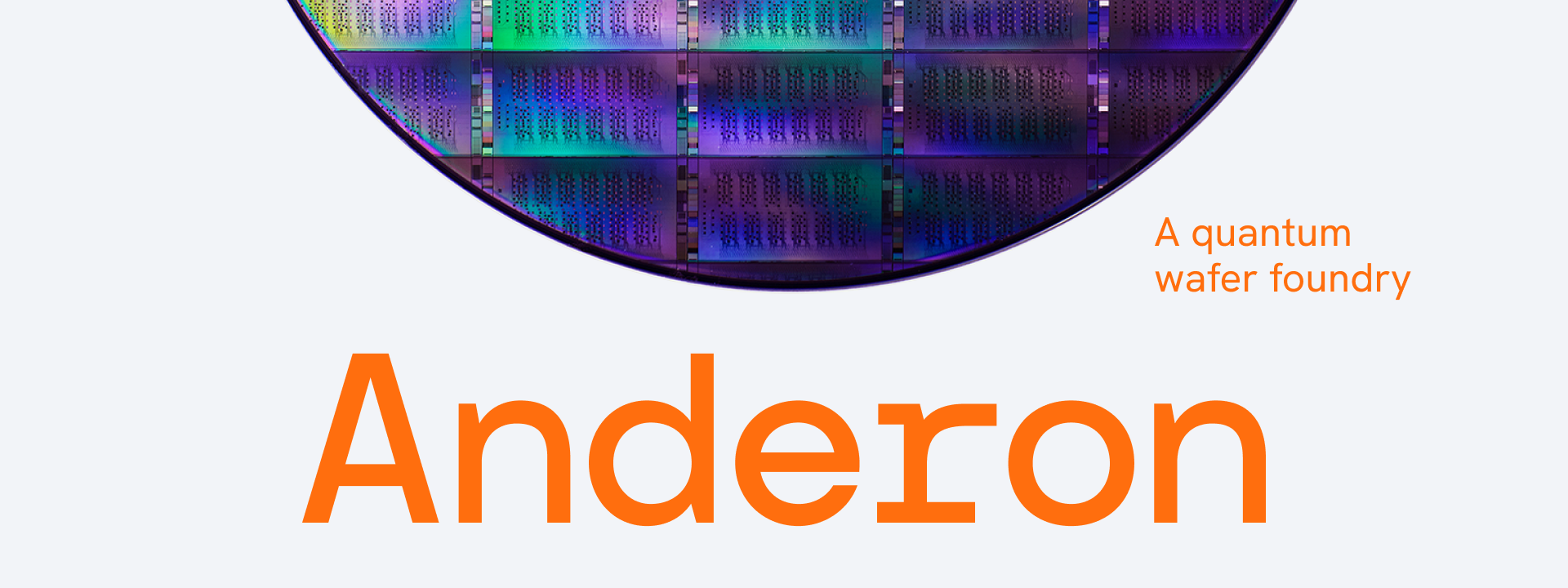
IBM's wholly owned subsidiary Anderon finalized a $1 billion direct grant awarded under the US CHIPS and Science Act, accompanied by an additional $1 billion matching investment from IBM, totaling $2 billion to expand a 300 mm pure-play quantum wafer foundry at the Albany NanoTech Complex in New York [15]. Business implications: This development signals that quantum hardware manufacturing is departing from the capital trade-offs of proprietary in-house cleanrooms, formally establishing a specialized industrial division of labor mirroring "pure-play wafer foundries" in conventional integrated circuits; the $2 billion capital injection significantly raises the fixed-asset barrier for hardware manufacturing, freeing fabless design startups from carrying fabrication line depreciation [15]. Strategic impact: The foundry will directly absorb fabrication orders for IBM's superconducting quantum processor arrays as well as third-party design firms, mitigating the industry-wide tape-out bottleneck; stable production capacity is expected within 24 to 36 months, fundamentally reshaping the global quantum hardware supply chain [15].

UK-based Oxford Quantum Circuits (OQC) and Trust Base, the digital subsidiary of Japan’s Sumitomo Mitsui Trust Group, co-published a financial benchmarking report comparing classical algorithms, hybrid quantum algorithms, and fully fault-tolerant algorithms across derivative pricing and Value at Risk (VaR) calculation scenarios [13][5]. Business implications and technical validation: Empirical tests confirmed that Quantum Physics-Informed Neural Networks (QPINNs) based on quantum parameter compression offer orders-of-magnitude parameter compression advantages, though classical benchmarks maintain superior engineering practicality under current hardware noise levels and absolute throughput costs [13][5]. Strategic impact: Moderates the financial sector’s uncritical rush toward Proofs of Concept (PoCs), establishing the first rigorous evaluation benchmark balancing algorithmic accuracy against hardware costs for major multinational banks, expected to guide the rational allocation of financial quantum budgets over the next 3 to 5 years [13][5].

Spanish technology center Gradiant entered into strategic partnerships with Airbus and Safran to jointly undertake three European Space Agency (ESA) space quantum projects, developing satellite quantum communications payloads and space-based quantum Earth observation instruments [21]. Strategic impact: Top European aerospace and defense leaders are aggressively moving into space-based, interception-resistant quantum secure communication infrastructure, driving procurement demand for solid-state single-photon sources, satellite-borne adaptive optics systems, and ultra-low-noise single-photon detection payloads over a 2-to-3-year delivery horizon [21].

The Beijing municipal government officially inaugurated its Quantum Technology "Scenario Handshake Initiative," establishing a public matchmaking framework to connect quantum computing and quantum secure communications enterprises, as well as leading research institutions, directly with front-line real-economy clients in traffic dispatching, power grid load balancing, and financial risk control [46]. Business implications: Policy support is transitioning from unilateral R&D subsidies toward "opening real production operational data and application scenarios," targeting the critical gap between lab prototypes and industrial purchase orders, with the initial wave of industrial demonstration applications expected to show results within 6 to 12 months [46].

Venture capital firm Matter Venture Partners announced the final close of its $450 million Fund II, focusing on core deep-tech sectors including semiconductor hardware, advanced computing infrastructure, quantum computing, and advanced manufacturing [43]. Strategic impact: Amid an overall cautious venture capital landscape, $450 million in fresh capital provides patient financing for early-stage quantum hardware and low-level control semiconductor teams undergoing capital-intensive R&D, with deployment scheduled across the next 3 to 4 years [43].

The Spanish National Research Council (CSIC) invested €6 million—supported by Spain’s PERTE Chip initiative and the EU NextGenerationEU fund—to open a specialized quantum micro/nanofabrication cleanroom zone at the Barcelona Institute of Microelectronics (IMB-CNM) [11]. Strategic impact: Integrating 36 interdisciplinary Spanish research teams and outfitted with high-precision electron-beam lithography and micro-analytical equipment, the facility focuses on pilot-line tape-outs for core QPU (Quantum Processing Unit) and QKD (Quantum Key Distribution) components, reinforcing Southern Europe's autonomous microelectronics supply chain [11].

Quantum Computing Inc. (QCI) signed a three-year collaborative framework agreement with Hamad Bin Khalifa University in Qatar to deploy an on-premises Dirac-3 entropy quantum computer in Qatar with cloud access, supporting joint research across optimization and sensing [17]. Strategic impact: Gulf sovereign capital is integrating novel quantum architectures into national sovereign computing frameworks, opening emerging Middle Eastern markets for optical analog and specialized physical architectures [17].

IonQ released a post-quantum cryptography (PQC) migration analysis warning that four operational timelines—regulatory compliance, adversarial threats, technology vendors, and organizational execution—are critically out of sync [4]; simultaneously, GAUGE analysis revealed that while a hybrid handshake protocol combining X25519 and ML-KEM-768 adds only 2.3 KB of network payload to reduce compromise probabilities by 20x, a mere 4.5% variance in memory overhead evaluation criteria completely reverses the security rankings of leading post-quantum schemes [25]. Strategic impact: Alerts security executives across multinational banking networks and critical infrastructure that relying solely on long-range fault-tolerant decryption timelines introduces substantial vulnerabilities, underscoring the urgency of deploying hybrid cryptographic protocols within 1 to 2 years [4][25].

05Other

Academic Frontier

CERN's international BASE collaboration used a specialized truck-mounted Penning trap to transport 92 antiprotons safely away from a fixed accelerator via highway in Geneva, Switzerland, and demonstrated stable containment inside the transportable apparatus for over a month, setting a world record for portable antimatter storage time [7]. Technical implications: The experiment overcame severe mechanical vibrations during road transport to preserve deep-cryogenic temperatures, strong magnetic fields, and ultra-high vacuum, proving that highly delicate antimatter particles can survive long-term outside stationary physical accelerator facilities; this surmounts a pivotal engineering threshold for transportable precision quantum metrology, laying an experimental foundation for testing quantum physical constants beyond the Standard Model in ultra-low-noise natural environments [7]. Strategic impact: Serves as a vital engineering reference for cryogenics and magnetic shielding in next-generation high-vibration-tolerant field quantum gravimeters, vehicle-mounted transportable optical lattice atomic clocks, and deep-space extreme-environment quantum sensing instruments [7].

Using hot-electron transient measurements, researchers successfully decoupled the individual contributions of direct electron-electron collisions and lattice phonon scattering to electrical resistivity increases in magic-angle twisted bilayer graphene, revealing that electron-electron collisions can drive up resistivity at elevated temperatures [6]. Technical implications and impact: Resolves a long-standing, intense debate in condensed matter physics regarding the origins of electrical resistivity in strongly correlated 2D materials, deepens the microscopic understanding of non-conventional strongly correlated transport, and provides key physical insights for designing novel low-dissipation superconducting topological devices and low-loss microwave interconnect materials [6].

Physicists utilized quantum vacuum fluctuations (intrinsic zero-point energy oscillations in microscopic space) within a high-Q electromagnetic cavity as a physical tuning mechanism to successfully enhance critical superconductivity in specific solid-state materials [40]. Technical implications and impact: Breaks with conventional material modification approaches reliant on heavy chemical element doping or intense external hydrostatic pressures to alter crystal structures, demonstrating for the first time that electromagnetic vacuum fields can serve as an effective microscopic knob to induce electron pairing, opening a new cavity quantum electrodynamics (cavity QED) paradigm for engineering high-temperature superconductivity [40].

Experimental physicists formulated a novel microscopic quantum coherent evolution experiment, subjecting the equivalence principle of general relativity to a new quantum evolution test using matter waves of falling and stationary single rubidium atoms, with experimental data matching Einstein’s equivalence principle to high precision [41]. Technical implications and impact: Further constrains the parameter space for unifying macroscopic continuous gravity and microscopic discrete quantum mechanics, establishing exceptionally stringent, high-confidence empirical bounds to screen phenomenological predictions of superstring theory and loop quantum gravity [41].

06Impact

Today’s Impact

  1. Superconducting chip design enterprises and foundry tape-out markets: Who is affected—IBM ecosystem design startups, hardware teams operating in-house micro/nanofabrication cleanrooms; What changed—Anderon secured $2 billion in CHIPS Act and parent funding to launch its 300 mm pure-play quantum wafer foundry expansion [15], which, alongside cooling cycles compressed to 1.2 hours [23], completely sweeps away the artisanal, workshop-style prototyping model of hardware manufacturing; What to watch next—Monitor when the Albany fabrication facility opens production scheduling to third-party fabless design firms, and whether wafer-level sampled fidelities consistently track the 99.5% production SOTA benchmark [15][23].
  2. Fault-tolerant algorithm teams and computing resource planners: Who is affected—Quantum algorithm architects, pharmaceutical and materials simulation teams; What changed—IBM's fusion of error detection and mitigation dropped the sampling overhead required for reliable computing to 1/63 of previous levels [44], compounded by constant-scaling ancilla requirements in magic state distillation [22] and pipelined syndrome decoding [26], causing hardware resource thresholds required for practical quantum advantage to drop precipitously; What to watch next—Track when the Qiskit software stack natively hardens the hybrid error-detection/mitigation pipeline, and verify whether classical computational costs for error mitigation rebound exponentially under deep, complex circuits [44][22][26].
  3. Solid-state spin chip manufacturing and control instrumentation: Who is affected—Silicon spin startups, commercial semiconductor foundries (STMicroelectronics, GlobalFoundries), ultra-high-speed cryogenic RF chip designers; What changed—Quobly completed end-to-end single-chip verification of single- and two-qubit gates and readout on an industrial 300 mm production line [14], while hole spin clock speeds reached a record 40 GHz [18], demonstrating the industrial feasibility of mass-producing high-frequency spin devices on mature foundry lines; What to watch next—Track full distribution data for two-qubit fidelities following cloud access to Quobly’s Alloy Pioneer chip, as well as microwave power dissipation and thermal management strategies under 40 GHz drive frequencies [14][18].
  4. Global financial risk teams and cybersecurity infrastructure leaders: Who is affected—Quantitative risk managers at banks and brokerages, enterprise CISOs overseeing critical information infrastructure; What changed—Oxford Quantum Circuits and Sumitomo Mitsui Trust benchmarked hybrid derivative algorithms, clarifying the boundaries between parameter-compression advantages and hardware noise overhead [13][5], alongside warnings of out-of-sync PQC migration timelines and heightened security sensitivity in hybrid handshakes [4][25]; What to watch next—Monitor live-production sandbox trial data from large financial institutions deploying hybrid quantum risk models, as well as production rollouts of post-quantum hybrid cryptographic handshakes across core gateway networks [13][4][25].
07Other

Editorial Commentary

Today’s global developments in quantum technology and industry mark a distinct inflection point where "manufacturing industrialization" and "algorithmic efficiency" converge at an accelerated pace. On the manufacturing front, from Anderon securing $2 billion to build the first 300 mm pure-play quantum wafer foundry to industrial wafer lines validating monolithic spin control and readout, quantum hardware is rapidly leaving behind artisanal university cleanroom fabrication and aligning with the mature, specialized division of labor characteristic of modern semiconductors. For front-line hardware startups, divorcing capital-light, fabless design from capital-heavy, specialized foundry manufacturing will drastically shorten R&D tape-out turnaround and pave the way for mass-manufactured quantum processors.

Echoing this capital-intensive manufacturing momentum, advances in algorithms and error correction are quietly reshaping the industry's timeline for practical quantum utility. Historically, the field viewed fully fault-tolerant QEC and near-term error mitigation as an either-or dichotomy. Today’s empirical results demonstrate that hybridizing both strategies slashes sampling overhead by tens of times; combined with magic state distillation protocols that hold ancilla qubit overhead constant, the physical qubit counts demanded by fault-tolerant computing are undergoing a rational recalibration. For investors and enterprise leaders, the era of fixating on raw physical qubit tallies has come to an end. Integrated systems that unite foundry-grade yields, high clock frequencies, and high-compression algorithm software stacks are emerging as the true competitive differentiator for the next phase of the quantum industry.